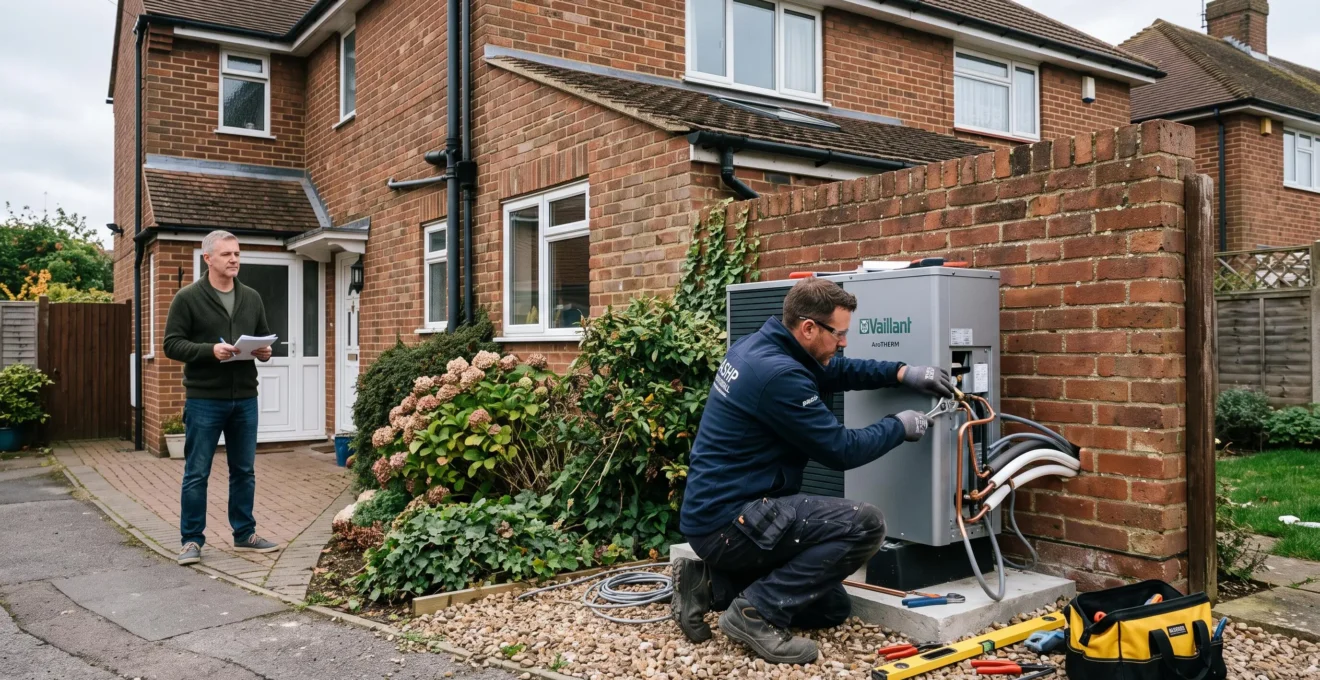
Yes, an interest-free eco loan is possible in parts of the UK, but there is no universal 0% renovation loan available to every homeowner. Scotland’s Home Energy Scotland Grant and Loan is one example of a government-funded programme that can provide interest-free borrowing for eligible improvements. Availability depends on where you live, the property, the proposed work and the programme’s funding rules.
The catch is that a 0% interest rate does not necessarily mean zero borrowing costs. Administration fees, installer requirements, energy assessments and payment delays can change the economics. Applying too early can also create problems if an offer expires before your contractor is ready. Starting work too early may be worse: some schemes explicitly refuse retrospective funding.
Before booking a heat pump installation, insulation upgrade or other energy improvement, establish which financing arrangement actually applies to your home. Then compare its full project cost, approval conditions and payment timetable against the alternatives.
0% eco loans in the UK: what matters most
- Eligibility is scheme-specific. Scotland has documented interest-free home energy finance, but its rules cannot be assumed to apply across England, Wales or Northern Ireland.
- Zero interest does not eliminate costs. Fees, eligible-work restrictions and contractor requirements can affect what you ultimately pay.
- Approval and timing are critical. Confirm the written-offer requirements, expiry date and funding release arrangements before committing to installation work.
- Why Do 0% Eco Loans Still Cost You in Fees, Scope Rules, or Admin Time?
- How to Pre-Check 0% Eco Loan Eligibility Using 7 Documents You Likely Already Have?
- 0% Eco Loan or Standard Loan: Which Is Better if You Need Work Done in 6 Weeks?
- The Application Mistake That Gets a 0% Eco Loan Rejected After You’ve Paid Deposits
- When Should You Apply for a 0% Eco Loan So Approval Doesn’t Expire Before Work Starts?
- Personal Loan or Mortgage Top-Up: Which Is Cheaper if You Might Move in 3 Years?
- How to Build a Renovation Cashflow Plan With a 15% Buffer Without Overborrowing?
- How Can You Finance an Energy Renovation Without Struggling With Cashflow in Month 2?
Why Do 0% Eco Loans Still Cost You in Fees, Scope Rules, or Admin Time?
A 0% eco loan can still cost money because interest is only one component of a renovation’s financing cost. Administration charges, restrictions on eligible improvements and the paperwork required to release funds can all affect the final bill. The correct comparison is between complete renovation budgets, not simply a 0% rate and a conventional loan’s advertised APR.
The first cost layer is the lender’s fee structure. Under the Scottish Government-funded programme, eligible borrowers pay no interest, but the scheme charges an administration fee of 1.5% of the loan amount, capped at £150. That charge is incorporated into monthly repayments rather than necessarily being paid upfront.
1.5%, capped at £150
Administration fee for interest-free borrowing under the Home Energy Scotland Grant and Loan for eligible owner-occupiers. This is a programme-specific charge, not a UK-wide standard.
The second layer concerns project scope. Programmes can distinguish between eligible and ineligible insulation, heating, glazing or renewable-energy measures. In Scotland‘s programme, energy-efficiency improvements generally need to appear among the recommended measures on the property’s EPC. Certain installations also require certified installers or products.
This does not establish that accredited contractors always charge more. It means that competing quotes must be compared on an equivalent specification, including certification, warranties, preparatory work and any excluded costs. Nor should borrowers assume that non-compliance automatically converts an interest-free loan into an interest-bearing one. The actual consequence depends on the scheme’s terms and may involve refusal, amendment or withdrawal of funding.
The third layer is administrative time. Quotes, energy reports, credit checks, installation certificates and completion evidence may all be required. Even when paperwork carries no separate application charge, obtaining it can consume time and potentially involve assessment costs.
To compare offers fairly, start with the same renovation specification. Add the proposed contractor’s total price, borrowing charges, required assessments and any separately funded work. Then subtract confirmed grant support and compare the total amount you would ultimately pay under each route.
An interest-free scheme can be financially unattractive if its approved scope prevents a better combination of improvements. Conversely, a compliant contractor’s higher quote may reflect work or protections missing from a cheaper quotation.
The next question is whether you and your proposed renovation can pass the relevant eligibility checks before you invest time in a full application.
How to Pre-Check 0% Eco Loan Eligibility Using 7 Documents You Likely Already Have?
You can prepare for a 0% eco-loan application by assembling seven types of evidence: identity, address, ownership, energy bills, an Energy Performance Certificate, an installer quotation and affordability information. Together, these help identify household and project eligibility problems before formal submission. They are a preparation checklist, not a universal list of documents required by every UK lender.
Most scheme-linked applications involve two separate eligibility questions. First, does the applicant and property qualify? Second, does the proposed improvement qualify for funding?
A homeowner can pass the first test and fail the second because the work is not supported by the required energy report, the contractor lacks the necessary certification or the proposed specification falls outside the programme.
The seven-document preparation file should identify what each item establishes:
| Document | What it helps establish | What to verify |
|---|---|---|
| Proof of identity | Applicant identity | Accepted documents and name consistency |
| Proof of address | Property location and residency | Current address and eligible geographic area |
| Mortgage statement or ownership evidence | Ownership status | Whether joint ownership or other arrangements qualify |
| Recent energy bills | Existing energy use and household context | Whether the provider requests consumption evidence |
| Energy Performance Certificate | Energy rating and recommended improvements | Validity, recommendations and scheme-specific requirements |
| Itemised installer quotation | Work specification and expected cost | Certification, eligible measures and exclusions |
| Income or affordability evidence | Ability to meet repayments | Accepted evidence and affordability criteria |
In England and Wales, an EPC is generally valid for ten years. It records a property’s energy-efficiency rating and recommended improvements, but legal validity does not automatically satisfy a particular financing programme. A recent renovation may also make an older assessment less representative of the building’s present condition.
The distinction is explained in GOV.UK guidance on residential Energy Performance Certificates. That guidance specifically concerns England and Wales, so Scottish and Northern Irish applicants must check the applicable local arrangements.
For a quick self-audit, label every document ready, outdated or missing. An available bill may be replaced relatively quickly; commissioning an assessment, securing a compliant quotation or resolving ownership questions may take longer. Do not assume that obtaining the documents guarantees acceptance.
Once the evidence is in order, the next decision depends on how soon your project must begin and whether scheme-linked finance can realistically meet that deadline.
0% Eco Loan or Standard Loan: Which Is Better if You Need Work Done in 6 Weeks?
If renovation work must begin within six weeks, the better loan is the one that can be approved, accessed and used for the specified work in time without creating excessive costs. A 0% scheme may save interest but require additional documentation and installation checks. A conventional personal loan may offer greater flexibility, depending on the lender and your circumstances.
The six-week deadline changes the calculation because approval speed and access to funds are different questions. A lender might approve an application before the money becomes available. Scheme-linked borrowing can also require a written funding offer before installation and separate evidence before payment.
The following comparison is a decision framework, not a promise about how quickly any product will be approved.
| Decision factor | Scheme-linked 0% eco loan | Standard personal loan |
|---|---|---|
| Borrowing cost | No interest where eligible; fees and uncovered costs may apply | Interest and any applicable charges |
| Approval and funding speed | May depend on eligibility, documents, available scheme funding and claims | Depends on underwriting, lender processes and disbursement terms |
| Administration | May require energy reports, certified installers and completion evidence | May involve fewer project-specific requirements |
| Installer flexibility | Can be restricted by programme standards | Usually determined by the borrower, subject to loan conditions |
| Six-week deadline risk | Approval or claim conditions may prevent the planned start | Funding may be available sooner, but this must be confirmed |
A lower-rate green personal loan is another possible category. Some lenders market preferential finance for qualifying energy improvements without using the same funding mechanism as a government-backed interest-free scheme. Such offers should be checked for their actual APR, fees, approved uses and repayment conditions.
Consider a hypothetical homeowner whose insulation contractor has a slot in six weeks. If an interest-free programme cannot confirm approval before work begins, the homeowner faces a choice: move the installation date, use another suitable financing product or change the project arrangement.
Taking a conventional loan to start immediately and assuming a scheme will reimburse the expenditure later is particularly risky. Where retrospective funding is prohibited, the completed or commenced work cannot simply be incorporated into the later application.
Request written confirmation of likely processing stages and required documentation from the scheme. Separately, ask any personal-loan provider when funds become accessible after approval. Neither an indicative timeframe nor an approval in principle should be treated as money already available.
Speed matters, but an apparently early commitment can undermine the scheme-linked option altogether if the applicant misunderstands what must happen before installation.
The Application Mistake That Gets a 0% Eco Loan Rejected After You’ve Paid Deposits
The most consequential application mistake is starting installation before a scheme has issued the required formal written funding offer. Paying a deposit or signing a contract too early can also expose you to financial loss, but it does not automatically invalidate every eco-loan application. The precise rejection trigger depends on the programme’s published conditions and how it defines the start of work.
Under Scotland’s Home Energy Scotland Grant and Loan, installation must not begin before written approval, and funding cannot be granted retrospectively. This is a clear distinction between preparing a project and commencing the installation itself.
The correct order for an applicant using a scheme with that rule is to obtain a suitable quotation, submit the required application, receive the formal offer and only then authorise the installation to proceed.
Before paying a deposit, ask the funding provider whether the payment or contract signature is permitted before the offer date. Do not rely on an installer’s assumption. Even if a deposit is allowed, the homeowner could still owe money under the installation contract if financing is refused.
A genuine funding offer should be checked for its approved amount, covered measures, conditions, validity period and any installer requirements. An eligibility estimate or approval in principle may indicate that the application can progress, but it is not necessarily authority to start work.
Deposit protection deserves a separate conversation with the installer. Ask whether the deposit benefits from an insurance-backed guarantee, an applicable trade-body arrangement or another documented protection. Obtain written terms describing cancellation, refund conditions and what happens if financing is not approved.
If a deposit has already been paid and funding is refused, potential options depend on the contract, the payment method and any protection arrangements. The scheme itself should not be assumed to reimburse the loss.
Five checks to complete before committing to installation
- Request an itemised contractor quotation and save the version showing the complete proposed scope.
- Ask the finance provider which actions are prohibited before approval and retain its written response.
- Obtain the formal funding offer and save a copy showing the approved amount and applicable conditions.
- Check deposit guarantees, cancellation terms and refund arrangements; retain the installer’s written confirmation.
- Agree an installation start date that complies with the offer and keep a dated confirmation of the contractor booking.
Once approval is secured, a different timing risk emerges: the offer might not remain valid until the installation and subsequent claim are completed.
When Should You Apply for a 0% Eco Loan So Approval Doesn’t Expire Before Work Starts?
Apply when the proposed work, documentation and contractor timetable are sufficiently settled that you can satisfy the scheme’s offer conditions within its validity period. Applying too early can waste that period while you wait for installation. Applying too late can leave the project without approval when the contractor is ready. Check both offer expiry and programme funding availability before submission.
There are two separate clocks. The first belongs to the individual funding offer: the time allowed to complete work, claim funding or meet any other stated conditions. The second belongs to the overall programme, where funding availability or budget changes may affect applications independently of an individual’s plans.
Scotland’s Home Energy Scotland Grant and Loan illustrates how those clocks interact. Its published guidance describes an application and claims process, including a target of ten working days to assess a complete application and a period of up to nine months for successful applicants to complete improvements and claim funding.
Those are programme-specific terms rather than universal eco-loan deadlines. Incomplete submissions may take longer, and a processing target does not guarantee approval. The nine-month period should not be interpreted as applying to private green loans or other funding schemes.
The Home Energy Scotland Grant and Loan application guidance also explains that funds are reserved when a written offer is issued, rather than simply when an application arrives.
Work backwards from the contractor’s realistic availability:
- Ask when the installer can begin and how long the work is expected to take.
- Identify any surveys, permissions, equipment lead times or preparatory measures that could affect the schedule.
- Obtain the complete document requirements and applicable approval conditions.
- Establish how long the offer remains valid and the deadline for submitting claims.
- Choose an application date that accommodates assessment delays without using up the available validity unnecessarily.
For example, if a contractor cannot start for several months, submitting an application immediately may be inappropriate for a product with a short offer window. Conversely, waiting until the week before installation could be unsafe where approval is mandatory before starting.
Before applying, establish whether an expired offer can be renewed, updated or must be replaced through a new application. Also ask whether a change of contractor, specification or installation date requires fresh approval.
Timing can protect eligibility, but the financing decision should also reflect your longer-term plans for the property, particularly if you expect to move before the borrowing is repaid.
Personal Loan or Mortgage Top-Up: Which Is Cheaper if You Might Move in 3 Years?
If you expect to move within three years, compare the cost of a personal loan with a mortgage further advance over that three-year period, including fees, interest and the cost of settling or transferring the debt. A lower mortgage rate does not necessarily produce a cheaper outcome. The outstanding balance and the lender’s rules when you sell can change the comparison substantially.
A personal loan is typically unsecured borrowing repaid through an agreed series of instalments. Interest rates, repayment terms and early-settlement arrangements depend on the lender and agreement. A shorter repayment period can increase monthly payments while reducing the time over which interest accumulates.
A mortgage top-up, often called a further advance, increases borrowing secured against the property. It may offer a different rate and longer repayment term, but can involve additional assessment, fees or changes to the total secured debt.
The crucial issue for a potential mover is what happens at sale. A further advance may need to be repaid from the sale proceeds, or it may be transferable under lender-specific conditions. Borrowers should not assume that an existing mortgage product or additional advance can automatically be ported to another property.
Ask the mortgage lender about portability, outstanding balances, early repayment charges and any restrictions before making the decision.
Hypothetical example: borrowing before a possible house move
Suppose a homeowner needs £12,000 for energy improvements and expects to sell in three years. One option is a personal loan repaid over a relatively short term. Another is a mortgage further advance with a longer repayment schedule.
The homeowner should calculate the payments made during the first 36 months, the remaining debt at that point, any finance fees and the charges associated with early settlement. The mortgage option may improve monthly cashflow without necessarily lowering the total cost over the period the homeowner expects to own the property.
A proper calculation should also distinguish financing cost from the repayment of principal: repaying borrowed capital is not itself an interest expense, although it affects the cash required when selling.
The probability of moving matters as well. If your sale date is uncertain, compare at least a three-year settlement scenario with the cost of keeping the loan for longer. The result will depend on your credit profile, available rates, repayment terms and charges.
Whichever route appears cheaper, it still has to fund the renovation at the right moments. That requires a cashflow plan rather than a simple total-cost estimate.
How to Build a Renovation Cashflow Plan With a 15% Buffer Without Overborrowing?
Build a renovation cashflow plan by separating confirmed work costs, payment dates, available funding and a contingency reserve. A 15% buffer can be a useful planning assumption, but it is not a guaranteed or universally appropriate allowance. Adjust it according to the likelihood of hidden defects, specification changes and uncertainty in contractor quotations, while avoiding borrowing the entire reserve unnecessarily.
Energy renovations can expose unexpected issues with insulation, access, existing heating systems or the building fabric. A detailed survey and clear contractor specifications reduce uncertainty but do not eliminate it.
The buffer should therefore reflect the project rather than simply follow a fixed percentage. A well-surveyed, narrowly specified installation may justify a different allowance from work involving concealed structural or fabric conditions.
Consider a hypothetical £20,000 renovation. Using 15% as a provisional contingency produces a £3,000 reserve and a £23,000 planning ceiling. That does not mean the homeowner must borrow £23,000 immediately. The reserve is money that may be needed, not an additional renovation budget to spend automatically.
The next step is to match payment stages to the actual availability of funds. The illustration below assumes fictional payment arrangements and is not a forecast of any particular scheme.
| Stage | Hypothetical payment | Funding question |
|---|---|---|
| Booking and deposit | £2,000 | Is cash available and is payment permitted under the scheme? |
| Installation milestone | £10,000 | Has approved funding actually been released? |
| Completion payment | £8,000 | Can the final invoice be covered before any reimbursement? |
| Separate contingency | £3,000 reserved | Is this accessible without unnecessary borrowing costs? |
Some scheme-linked products release money after completion or verification. Others may allow staged funding or an advance for particular measures. Under Scotland’s programme, an advance of up to 60% may be requested for eligible renewable-energy improvements after acceptance of a funding offer, but approval of that request is discretionary and the arrangement does not apply to all improvements.
The contingency should remain separate from optional upgrades. Additional glazing, upgraded controls or cosmetic work might be worthwhile, but they should not silently consume funds reserved for unforeseen essential costs.
Review the budget each month using three figures: committed costs, invoices actually paid and remaining contingency. If the projected final spend exceeds the agreed ceiling, pause optional scope additions and seek revised quotations or payment arrangements before taking on further borrowing.
The remaining challenge is coordinating those payments with the different funding sources so the renovation does not run short of cash after work has begun.
Key takeaways before choosing your financing mix
- Borrowing approval and cash availability are separate milestones: confirm both before relying on a loan to pay an installer.
- Protect household liquidity by comparing the timing of invoices with actual disbursement rules, rather than counting promised funding as cash already received.
- Choose borrowing terms that remain manageable if the renovation is delayed or the property is sold earlier than planned.
How Can You Finance an Energy Renovation Without Struggling With Cashflow in Month 2?
To avoid a cash shortage in the second month of an energy renovation, arrange financing before installation starts and map every contractor payment against the date the funds will actually become available. Combine savings, eligible grants, scheme-linked borrowing or conventional finance only where their conditions are compatible. The goal is not merely to cover the total project cost but to keep enough accessible cash throughout the works.
Month two can become difficult when the initial deposit has already reduced savings, interim invoices arrive and a loan or grant payment remains conditional on installation evidence. The project may be fully funded on paper while still experiencing a temporary cash gap.
Think of the UK renovation funding options as different layers rather than interchangeable products:
- Savings: immediately accessible funds, provided using them does not leave the household without a necessary emergency reserve.
- Scheme-linked interest-free loans: potentially attractive borrowing costs for qualifying projects, subject to geography, approved measures, documentation and payment conditions.
- Green or standard personal loans: possible alternatives where the relevant terms, available amount and funding date fit the project.
- Mortgage further advances: secured borrowing that requires consideration of property equity, repayment duration, fees and moving plans.
- Grants or other scheme support: assistance where the household and work qualify, subject to funding availability and rules on combining support.
For Scotland’s interest-free programmes, eligibility can also differ between owner-occupiers and landlords. For example, the Home Energy Scotland Private Rented Sector Landlord Loan has its own conditions, including distinctions based on portfolio size. Its borrowing terms should not be substituted for those of the owner-occupier programme.
To test the month-two position, build a simple timeline with the contractor. Record when the deposit, interim invoices and final balance fall due. Place alongside them only the savings already available and financing releases supported by the relevant agreement. Where funding is subject to claims or completion evidence, treat the expected receipt as conditional until the provider confirms it.
If the timeline shows a shortfall, address it before work begins. Possible responses include negotiating milestone payments, rescheduling installation, changing the financing structure or reducing the project scope. Taking expensive short-term borrowing merely to cover an avoidable payment mismatch can undermine the benefit of a 0% loan.
The final financing decision should integrate all the earlier checks: eligible scope and charges, supporting documents, approval timing, deposit conditions, offer expiry, the realistic period you expect to own the property and the contingency needed for unexpected work.
Ask the lender or scheme administrator for written confirmation of the conditions that apply to your property and project. Then agree the installation and payment schedule with your contractor using confirmed approval dates, accessible funds and realistic contingency assumptions—not the advertised interest rate alone.
Is there a government-backed 0% eco loan for every UK homeowner?
No. The Home Energy Scotland Grant and Loan offers interest-free borrowing to qualifying Scottish owner-occupiers for specified improvements, subject to its conditions and available funding. This does not establish an equivalent entitlement in England, Wales or Northern Ireland. Homeowners should check schemes applicable to their own location and property.
Can you get a 0% eco loan with a poor credit history?
Approval is not guaranteed. Some interest-free schemes, including the Scottish owner-occupier programme, require credit and affordability checks. A zero interest rate does not remove the lender’s assessment of repayment ability. Applicants should check the relevant eligibility terms before assuming that government-backed finance is available regardless of their credit profile.
Can you combine an interest-free eco loan with a government grant?
Some programmes permit grant and loan funding within the same approved renovation, but there may be maximum funding limits, eligible-cost restrictions and rules against receiving duplicate support for the same improvement. Scotland’s Home Energy Scotland Grant and Loan has specific arrangements for combining support. Eligibility for one programme does not automatically establish eligibility for another.
Do you have to pay an eco-loan instalment before the installer finishes?
It depends on the lender’s disbursement and repayment rules. A conventional loan may begin accruing interest or require payments according to its agreement, even if installation is delayed. Some scheme-linked borrowing has different arrangements for staged drawdowns, final claims and the start of repayments. Check the repayment commencement date and the contractor’s invoice schedule before accepting the finance.
Does an unused eco-loan approval guarantee that funding remains available indefinitely?
No. A funding offer can carry a fixed validity period and conditions for completing work or making a claim. Scheme budgets may also change. Under Scotland’s programme, a written funding offer is significant because funding is reserved at that stage, but the offer still has conditions and an expiry framework. Ask the provider what happens if installation is delayed beyond the permitted period.