Energy markets and economics
Energy is one of the largest and most strategically important markets in the world. Every time you flip a light switch, fill up a car or heat your home, you are participating in a complex system of production, trading and pricing that spans continents. Yet for most people, the way energy prices are set remains a mystery. This pillar page explains the fundamentals of energy markets and economics in clear, accessible terms: how prices form, why they fluctuate, and how the global energy transition is reshaping everything from your utility bill to national economic policy.
What Are Energy Markets?
An energy market is any organized system where energy commodities are bought and sold. The main commodities include crude oil, natural gas, electricity, coal and, increasingly, renewable energy certificates and carbon allowances. Each commodity has its own trading structure, participants and pricing logic.
Energy markets come in two broad forms. Wholesale markets are where producers, utilities and large traders exchange huge volumes, often through exchanges like those trading Brent crude or Henry Hub natural gas. Retail markets are where households and businesses ultimately buy their energy, with prices influenced by wholesale costs, network fees, taxes and supplier margins.
Key Participants in the Market
- Producers: oil companies, gas drillers, power generators and renewable energy developers.
- Traders and intermediaries: firms that buy and sell energy contracts to manage risk or profit from price movements.
- Utilities and suppliers: companies that deliver energy to end consumers.
- Regulators and governments: authorities that set rules, monitor competition and sometimes cap prices.
- Consumers: households, industries and businesses whose demand drives the entire system.
How Energy Prices Are Set
At the most basic level, energy prices follow the laws of supply and demand. When demand rises faster than supply can respond, prices climb. When supply outpaces demand, prices fall. But energy is not an ordinary commodity, and several unique features shape its pricing.
Electricity: The Marginal Pricing Model
In most wholesale electricity markets, the price for a given period is set by the marginal cost of the last power plant needed to meet demand. Renewable sources like wind and solar have near-zero marginal cost because the fuel is free, while gas-fired plants carry fuel and carbon costs. During periods of high demand or low renewable output, expensive gas plants set the price for everyone. This is known as marginal clearing, and it explains why electricity bills can rise sharply even when renewables are abundant most of the time.
A simple analogy: imagine a taxi market where every passenger pays the fare of the most expensive cab needed that hour. Even if cheap drivers are available, everyone pays the peak rate during rush hour.
Oil and Gas: Global Commodity Dynamics
Oil is a globally traded commodity, so its price reflects worldwide supply decisions, geopolitical tensions, storage levels and expectations about future demand. Natural gas is more regional: it moves through pipelines or, increasingly, as liquefied natural gas (LNG) shipped across oceans. LNG has made gas markets more interconnected, which means a supply shock in one region can now raise prices on the other side of the world.
Why Energy Prices Are Volatile
Energy is among the most volatile commodity classes, and understanding why helps consumers and businesses make better decisions.
- Inelastic demand: people and factories cannot instantly reduce energy use when prices rise, so small supply gaps cause large price spikes.
- Weather sensitivity: cold winters, heatwaves, droughts and low-wind periods can sharply change demand and renewable output within days.
- Geopolitics: conflicts, trade restrictions and sanctions on major producing countries can disrupt supply chains overnight.
- Infrastructure constraints: pipelines, transmission lines and LNG terminals take years to build, so supply cannot quickly respond to price signals.
- Storage limitations: electricity in particular is expensive to store at scale, forcing real-time balance between production and consumption.
For a practical example, consider a manufacturing plant that locks in a fixed electricity contract. When wholesale prices spike, the plant remains insulated for the contract period, while a business on a variable tariff sees its costs jump immediately. This illustrates why hedging and contract choice are central concepts in energy economics.
The Economics of the Energy Transition
The shift from fossil fuels to renewable and low-carbon energy is fundamentally an economic transformation, not just a technological one. Several forces are driving it.
Falling Costs of Renewables
The cost of solar panels and wind turbines has fallen dramatically over recent decades thanks to economies of scale, improved efficiency and manufacturing learning curves. In many regions, building new solar or wind capacity is now cheaper than operating existing fossil fuel plants. This changes the economics of generation: the industry is shifting from a model where fuel costs dominate to one where upfront capital investment matters most.
New Market Challenges
Renewables bring complications that traditional markets were not designed for:
- Intermittency: output depends on weather, requiring flexible backup, storage and demand management.
- Zero marginal cost: when renewables dominate, wholesale prices can fall to very low levels, making it harder to recover investment costs.
- Grid congestion: renewable generation is often located far from demand centers, straining transmission networks.
- Need for flexibility: batteries, pumped hydro, demand response and interconnection become valuable new market products.
Carbon Pricing and Policy Instruments
Governments use economic tools to steer the transition. Carbon pricing, either through taxes or cap-and-trade systems, puts a cost on emissions and makes clean energy relatively more competitive. Subsidies, renewable mandates and clean energy auctions accelerate deployment. These interventions are not add-ons to energy markets; they are now core determinants of prices and investment decisions.
What This Means for Households and Businesses
Understanding energy economics is not just academic. It has direct practical implications.
For Households
- Compare tariffs carefully: fixed-rate contracts offer protection against spikes, while variable rates can benefit from falling markets.
- Improving home efficiency (insulation, heat pumps, efficient appliances) reduces exposure to price volatility permanently.
- Rooftop solar and battery storage can turn consumers into partial producers, sometimes called prosumers.
- Time-of-use pricing rewards shifting consumption to off-peak hours when electricity is cheaper and cleaner.
For Businesses
- Audit energy consumption to identify the largest cost drivers and efficiency opportunities.
- Assess risk tolerance to choose between fixed, variable or blended procurement strategies.
- Monitor market fundamentals such as gas prices, weather forecasts and policy changes that signal future price movements.
- Consider on-site generation, power purchase agreements (PPAs) or demand flexibility programs to reduce costs and emissions.
Common Questions About Energy Markets
Why do electricity prices change every hour?
Because electricity must be produced and consumed at the same moment, wholesale prices are set in short intervals, often hourly or every fifteen minutes, reflecting real-time balance between supply and demand.
Why did my bill rise when renewable capacity grew?
Retail bills include more than generation costs: network infrastructure, taxes, supplier margins and the cost of maintaining backup capacity all play a role. Renewables can lower wholesale generation costs while other components continue to rise.
Are energy markets free markets?
They are hybrid systems. Most liberalized markets combine competitive wholesale trading with heavy regulation of networks, consumer protections and policy-driven incentives. Pure free-market energy pricing exists almost nowhere.
The Road Ahead
Energy markets are entering their most profound transformation in a century. Electrification of transport and heating, the growth of storage, the rise of hydrogen, digitalization of grids and the decentralization of production are all rewriting the economic rules. For consumers, the key takeaway is that energy choices are increasingly investment decisions: efficiency, flexible consumption and self-generation all affect long-term costs. For businesses and investors, understanding market fundamentals is now essential to managing risk in a sector where volatility and opportunity arrive together.
By grasping how supply, demand, policy and technology interact, anyone can make smarter energy decisions, whether that means choosing the right tariff, planning a company procurement strategy or simply interpreting the news about oil and gas prices with more confidence.
Does Fossil Fuel “Depletion” Matter for UK Households if There’s Still Supply?
Britain is not about to wake up one winter morning and discover that every oil and gas reserve has disappeared. Yet that does not make fossil fuel depletion irrelevant to household finances. Fuel can remain physically available while becoming more…
Read more
Why Do Fossil Energy Prices Spike So Fast and Hit Households First?
Fossil energy prices can rise sharply because the price of gas and oil responds to changes in supply, demand and geopolitical risk long before households can change their heating systems, cars or energy contracts. When supply becomes uncertain, wholesale markets…
Read more
How Much Energy Does Your Home Actually Need in Winter Before You Buy Anything?
Your home’s annual energy consumption does not tell you how much heating capacity it needs on a freezing January evening. Nor does a high Energy Performance Certificate (EPC) rating necessarily mean your current system is correctly sized. Before spending thousands…
Read more
How Can You Finance an Energy Renovation Without Struggling With Cashflow in Month 2?
An energy renovation can be affordable on paper and still become financially difficult halfway through. A contractor requests a second payment, the lender has not released the funds, and unexpected damp repairs must be completed before insulation can proceed. By…
Read more
Can You Get a 0% Eco Loan in the UK, and What’s the Catch if You Apply Too Early?
Yes, an interest-free eco loan is possible in parts of the UK, but there is no universal 0% renovation loan available to every homeowner. Scotland’s Home Energy Scotland Grant and Loan is one example of a government-funded programme that can…
Read more
Who Actually Controls Your Energy Bill in the UK Energy Sector?
Your energy supplier sends the bill, but it does not independently control everything you pay. Electricity generators influence wholesale prices, network operators maintain the infrastructure delivering energy, Ofgem regulates important parts of the system, and government policy affects certain costs…
Read more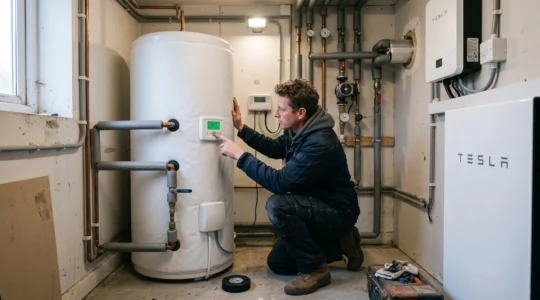
Should You Store Energy as Heat or as Motion When Electricity Prices Spike?
When electricity prices rise during peak hours, storing energy beforehand can reduce the amount purchased at expensive rates. But choosing between thermal storage and mechanical storage is not simply a question of which technology holds energy most efficiently. It depends…
Read moreExploring the reasons why electricity prices are so expensive
Imaginez la scène : vous recevez votre facture d’électricité et constatez une augmentation significative par rapport au mois précédent. Un sentiment de frustration et d’incompréhension vous envahit. Vous n’êtes pas seul. De plus en plus de consommateurs à travers le…
Read moreNI railways news: enhancements in electric train services announced!
Northern Ireland Railways (NI Railways), the sole train operator in Northern Ireland, is dedicated to providing reliable and durable transportation solutions for its passengers. A recent report from the Department for Infrastructure indicated a 15% increase in rail passenger numbers…
Read moreIs gas set to be phased out by 2030 in the UK?
Driven by climate commitments and energy security concerns, the UK is contemplating a significant shift away from natural gas. Despite decarbonization efforts, natural gas still heats approximately 85% of UK homes [Source: Department for Energy Security and Net Zero], highlighting…
Read more