Electrical technologies
Electricity sits at the heart of the modern energy transition. As countries move away from fossil fuels and toward cleaner sources of power, the technologies that generate, move, and manage electricity have become more important than ever. Yet for many readers, the field of electrical technologies can feel opaque: full of jargon, acronyms, and technical concepts that seem reserved for engineers.
This pillar page aims to change that. Here you will find a clear, structured overview of the main electrical technologies shaping today’s energy landscape, how they connect to one another, and what they mean in practice for households, businesses, and communities.
What Are Electrical Technologies?
Electrical technologies refer to the full chain of systems and devices involved in producing, transporting, storing, and using electricity. Think of the power system as a river: water flows from a source, through channels, into reservoirs, and finally to the tap. Electricity follows a similar path, from generation plants or rooftop panels, through transmission lines, into local distribution networks, and eventually into your home appliances.
The field covers several broad domains:
- Power generation technologies, including solar, wind, hydro, and conventional plants
- Grid infrastructure, such as transformers, transmission lines, and substations
- Power electronics, the devices that convert and control electrical energy
- Energy storage, from large-scale batteries to home systems
- Smart grid and digital technologies, including meters, sensors, and automation
- Electric mobility and charging infrastructure
Each of these domains plays a distinct role, but they increasingly work together as one interconnected system. Understanding how they fit together is the first step toward making sense of the energy transition.
Renewable Energy Generation: The New Backbone of the Grid
For over a century, electricity was generated mostly by burning coal or gas, or by harnessing large dams. Today, the generation landscape is far more diverse, with solar and wind growing faster than any other power sources in many regions.
Solar Photovoltaic Systems
Solar photovoltaic (PV) panels convert sunlight directly into electricity using semiconductor materials. Their appeal is simple: they are modular, silent, and can be installed almost anywhere, from a suburban rooftop to a utility-scale farm in the desert. Costs have fallen dramatically over the past decades, making solar one of the most affordable sources of new electricity in many markets.
A typical residential installation includes the panels themselves, an inverter that converts the panels’ direct current (DC) into the alternating current (AC) used by household appliances, and increasingly, a battery to store excess production for evening use.
Wind Power
Wind turbines convert the kinetic energy of moving air into electricity. Onshore wind farms are now a familiar feature of rural landscapes, while offshore turbines, larger and steadier in their output, are expanding rapidly along coastlines. Modern turbines are remarkably efficient, converting a large share of the wind’s energy into usable power.
Hydropower and Other Renewable Sources
Hydropower remains the largest renewable electricity source globally. Beyond large dams, small hydro and pumped storage facilities play a key balancing role, storing energy by pumping water uphill when electricity is abundant and releasing it when demand rises. Other sources, such as geothermal and biomass, contribute where local conditions allow.
Power Electronics: The Quiet Workhorse of Modern Electricity
One of the least visible but most transformative electrical technologies is power electronics. These are devices that convert electricity from one form to another, for example from DC to AC, or from one voltage to another, using fast-switching semiconductors.
Power electronics are everywhere in the modern energy system:
- In solar inverters, which turn panel output into grid-compatible AC power
- In electric vehicle chargers, which manage the flow of energy into the battery
- In battery systems, which control charging and discharging cycles
- In variable-speed drives, which make industrial motors far more efficient
A helpful analogy is to think of power electronics as the translators of the electrical world. Solar panels, batteries, and electric motors all speak different electrical dialects; power electronics make sure they can converse with the grid and with each other smoothly and safely.
Energy Storage: Solving the Intermittency Puzzle
The sun does not always shine and the wind does not always blow. This variability is the central challenge of renewable energy, and energy storage is its main answer. By storing electricity when production is high and releasing it when demand peaks, storage systems smooth out the mismatches between supply and consumption.
Battery Storage
Lithium-ion batteries dominate the current storage market, both at grid scale and in homes. Grid-scale batteries, sometimes housed in large containers next to solar farms or substations, can respond in milliseconds to fluctuations in the grid, providing services that were once handled by fossil fuel plants.
At home, a battery paired with rooftop solar allows a household to use its own solar power after sunset, reducing bills and reliance on the grid. For many homeowners, the decision comes down to a few practical questions:
- How much of your electricity use happens in the evening or at night?
- Do you live in an area with frequent power outages or time-of-use pricing?
- Is there a local incentive or rebate program for installing storage?
Other Storage Technologies
Batteries are not the only option. Pumped hydro remains the largest form of grid storage worldwide. Emerging technologies, such as flow batteries, compressed air storage, and thermal storage, offer alternatives suited to longer durations or specific use cases. The storage landscape is evolving quickly, and no single technology will dominate every situation.
Smart Grids and Digitalization
Traditional power grids were designed for one-way flow: electricity moved from large central plants to passive consumers. Today’s grid must handle far more complexity, with millions of rooftop solar systems, electric vehicles, and connected devices all interacting with the network.
The smart grid is the response to this challenge. It combines physical infrastructure with digital communication and control, allowing the grid to observe, anticipate, and respond to changing conditions in near real time.
Key components include:
- Smart meters, which record consumption in detail and enable dynamic pricing
- Grid sensors and automation, which detect faults and reroute power to avoid outages
- Demand response programs, which reward consumers for shifting usage to off-peak hours
- Virtual power plants, which aggregate thousands of home batteries and EVs into a single, dispatchable resource
Consider a practical example: on a hot summer afternoon, air conditioning demand spikes. Instead of firing up a peaking gas plant, a utility can draw power from thousands of home batteries enrolled in a virtual power plant, meeting demand cleanly and often at lower cost.
Electric Mobility and Its Impact on the Grid
Transport electrification is one of the most visible aspects of the energy transition. Electric vehicles (EVs) replace internal combustion engines with electric motors powered by large onboard batteries, and their adoption is accelerating across many countries.
EVs are both a challenge and an opportunity for electrical systems:
- Challenge: unmanaged charging, especially during evening peaks, can strain local distribution networks
- Opportunity: smart charging can shift EV charging to hours of abundant renewable generation, and vehicle-to-grid technology can even allow cars to feed power back when needed
Charging infrastructure itself is a fast-evolving electrical technology, spanning home wallboxes, workplace chargers, and ultra-fast public stations that can replenish a vehicle in under an hour. Installing a home charger typically requires a professional assessment of your electrical panel’s capacity, a step worth planning early.
Energy Efficiency: The Often Overlooked Technology
Not every electrical technology produces or stores energy; some simply help us use less of it. Energy efficiency is frequently described as the first fuel of the energy transition because the cleanest kilowatt-hour is the one never consumed.
High-impact efficiency technologies include:
- LED lighting, which uses a fraction of the energy of older bulbs
- Heat pumps, which deliver several units of heat for each unit of electricity consumed
- Efficient motors and drives in industry, where motors account for a large share of electricity use
- Smart thermostats and building automation, which reduce waste without sacrificing comfort
Efficiency and electrification work hand in hand: a well-insulated home with a heat pump needs far less energy overall, making the transition both cheaper and easier on the grid.
How These Technologies Fit Together
The real power of modern electrical technologies lies in their integration. A single day in an advanced energy system might look like this: solar panels produce surplus power at midday, batteries store the excess, smart meters signal favorable pricing to flexible appliances, EVs charge using cheap clean electricity, and in the evening, stored energy is released as demand rises. Every element communicates with the others, creating a system that is cleaner, more resilient, and more responsive than the grids of the past.
This integration also changes the role of consumers. Households and businesses are no longer passive buyers of electricity; they can be producers, storers, and flexible users all at once, a shift often described through the term prosumer.
Getting Started: Practical First Steps
If you are new to this field, the breadth of electrical technologies can feel overwhelming. A simple progression can help:
- Assess your current situation: review your electricity bills, identify your main uses, and note any local incentives
- Prioritize efficiency: upgrade lighting, appliances, and insulation before investing in generation
- Consider solar: evaluate your roof’s orientation, shading, and local permitting rules
- Add storage or smart controls: once generation is in place, batteries and smart devices extend its value
- Plan for electrification: think ahead about heat pumps and EV charging as part of a long-term roadmap
Consulting a qualified electrician or energy advisor at each stage helps ensure that safety, code compliance, and system compatibility are all handled correctly.
Conclusion: A System in Transformation
Electrical technologies are the invisible architecture of the energy transition. From the solar panels on a neighbor’s roof to the smart meters quietly recording usage data, these systems are reshaping how electricity is made, moved, and consumed. They bring real challenges, such as grid integration and upfront costs, but also substantial benefits: lower emissions, greater energy independence, and more resilient infrastructure.
As the pieces described in this overview continue to mature and converge, understanding them becomes valuable not just for engineers, but for anyone who pays an electricity bill, drives a vehicle, or cares about the future of energy. The transition is not happening somewhere distant; it is wired into the walls around us.
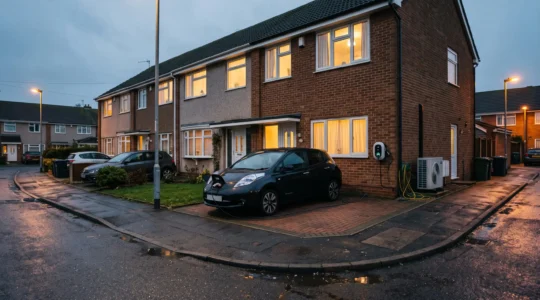
Why Does Your EV Charger Slow Down at 6–9pm Even on a 7 kW Unit?
A 7 kW home EV charger does not necessarily deliver 7 kW throughout every charging session. If charging slows between 6pm and 9pm, the cause could be falling supply voltage, household load management, charger temperature, or a charging schedule rather…
Read more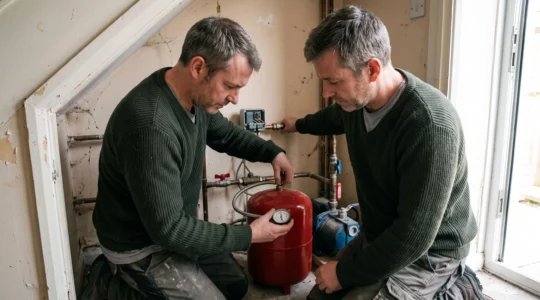
Why Does Your Water Pump Cycle Every 30 Seconds and Add £20 a Month to Bills?
A water pump that starts every 30 seconds is signalling a problem worth investigating. In a conventional pressure-controlled system, frequent starts can indicate inadequate pressure vessel precharge, insufficient storage capacity, a leaking non-return valve or an unnoticed water leak. The…
Read more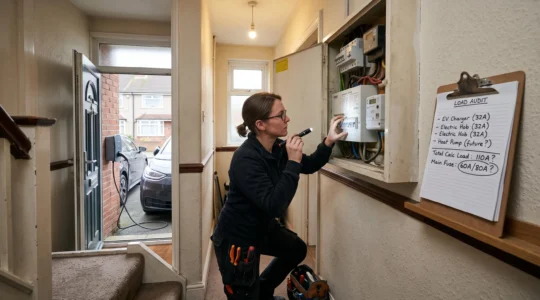
What Limits Your Home’s Electrical Supply When You Add an EV, Induction, and Heat Pump?
A home that has comfortably supported conventional appliances for decades may face a different electrical demand profile once an electric vehicle charger, air-source heat pump and induction hob are installed. The challenge is not simply whether the consumer unit has…
Read more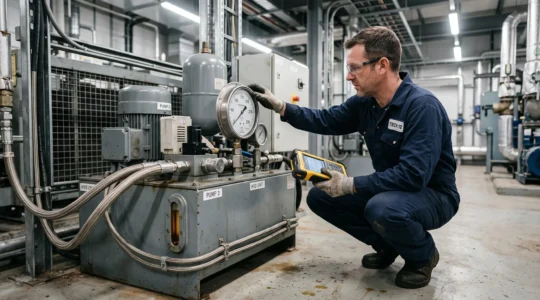
Which Hydraulic System Setup Delivers Stable Power Without Leaks or Overheating?
A hydraulic system can deliver adequate pressure on a gauge and still suffer from hose leaks, premature pump wear or overheating. The problem is often not insufficient pump power. It is a mismatch between pressure control, component ratings, fluid cleanliness,…
Read more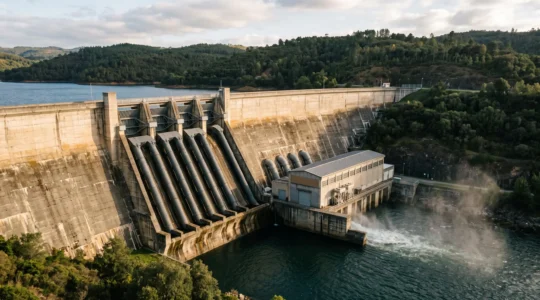
How Does Hydroelectricity Turn Falling Water Into Electricity Without “Using Up” Water?
Hydroelectricity generates electricity by converting the energy of water moving from a higher elevation to a lower one. The water passes through a turbine, makes it rotate, and continues downstream. What the power station extracts is energy, not the water…
Read more
From cooling to heating: when a reversible heat pump becomes a year-round comfort system
British households face an increasingly difficult thermal balancing act. Summer heatwaves push bedroom temperatures beyond comfortable sleeping conditions, whilst winter cold snaps demand reliable heating. The traditional response—a gas boiler for winter warmth and portable fans or separate air conditioning…
Read moreExploring the latest innovations in conductive materials technology
Les matériaux vecteurs de courant sont omniprésents dans notre monde moderne. Ils alimentent les appareils électroniques, les systèmes énergétiques et les dispositifs médicaux qui façonnent notre vie quotidienne. Des smartphones que nous tenons dans nos mains aux réseaux électriques qui…
Read moreThe future of hydrogen storage technologies in electrical networks
La nécessité de réduire les émissions de carbone et d’intégrer les énergies renouvelables dans nos réseaux électriques souligne l’importance du stockage d’énergie. Les énergies renouvelables, comme le solaire et l’éolien, sont intermittentes. Pour un approvisionnement stable, des solutions de stockage…
Read moreExploring the benefits of using samsung TV power plug efficiently?
La télévision est un élément central de nombreux foyers, offrant divertissement et information. Cependant, elle représente une source de dépense énergétique non négligeable. Si vous possédez un téléviseur Samsung, il existe plusieurs façons d’optimiser son utilisation et de réduire votre…
Read moreMaximizing energy savings with smart plug sockets at home
Imaginez ceci : vous quittez votre domicile, et vous vous rappelez soudainement que vous avez oublié d’éteindre le fer à repasser. Ou peut-être vous êtes-vous déjà demandé combien d’énergie vos appareils consomment même lorsqu’ils sont éteints. La solution pourrait bien…
Read more