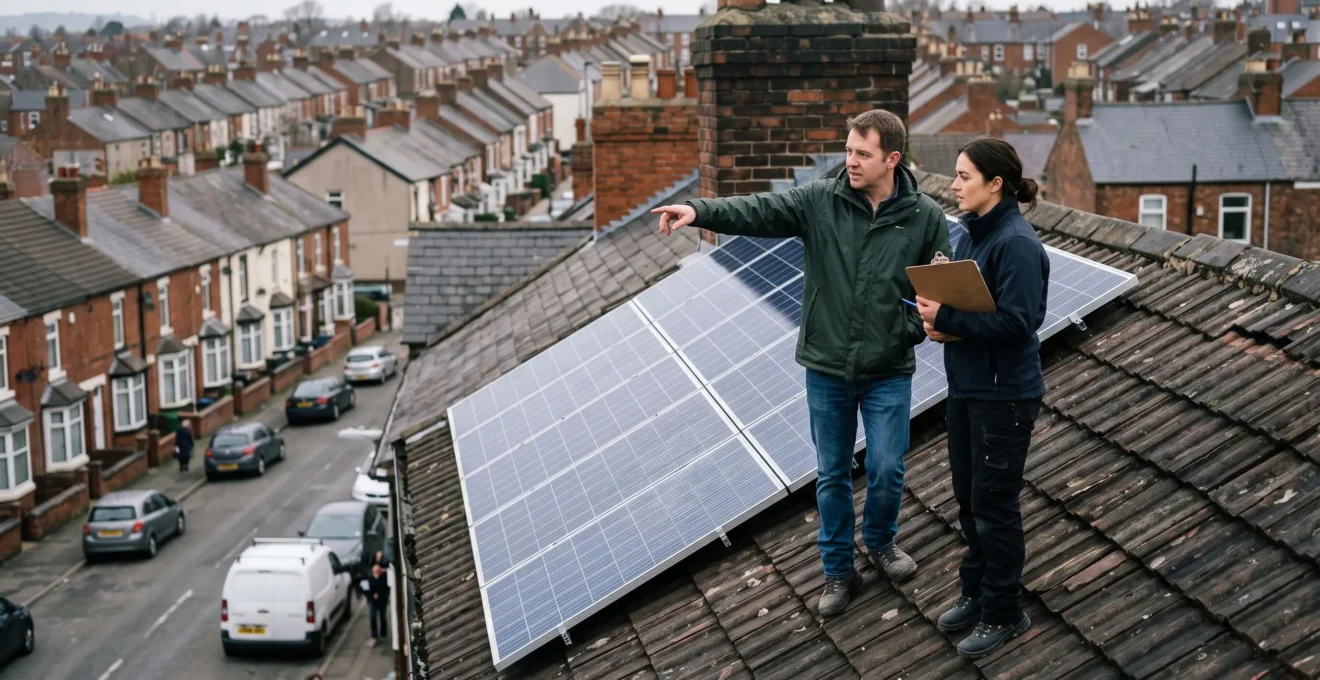
The most reliable approach to generating electricity at home in the UK is usually a combination of properly sized solar panels, an appropriate grid connection, and carefully chosen storage or backup where needed. No single technology guarantees cheap electricity, dependable evening supply and resilience during prolonged winter outages.
Solar panels can reduce purchased electricity, but their output varies with daylight and weather. Batteries help households use more of their own generation after sunset, yet cannot replace energy that was never produced. Portable generators provide an alternative during outages, although fuel, maintenance, noise and electrical safety requirements make them less attractive for everyday use. Small domestic wind turbines may appear to offer a winter complement to solar, but their suitability depends heavily on local wind conditions and installation constraints.
For a UK homeowner, the important decision is not which technology has the highest advertised output. It is which combination meets actual consumption patterns, works within the property’s limitations and delivers worthwhile benefits over its operating life.
Home electricity generation: the essentials
- Size for actual output: solar panel ratings and generator specifications are not guarantees of continuous household supply.
- Match the timing: solar produces electricity mainly during daylight, while batteries and load shifting can help meet evening demand.
- Build reliability in layers: reduce avoidable demand, use compliant electrical connections and reserve backup capacity for genuinely essential loads.
- Why Do Home Generators and Renewables Rarely Deliver Their “Rated” Power?
- How to Match Home Generation to Your Actual Daily Load Curve in 4 Steps?
- Solar Only, Solar Plus Battery, or Generator: Which Covers Evening Use Best?
- The Backfeed Mistake That Can Endanger Line Workers and Get You Fined
- When Should You Add Generation Instead of Upgrading Efficiency First?
- How to Estimate Your Solar Self-Use Rate Without Any Apps or Monitoring Gear?
- How to Build a Home Resilience Plan Without Relying on Fossil Backup?
- Are Conventional Energy Sources Still the Most Reliable Option During Cold Snaps?
Why Do Home Generators and Renewables Rarely Deliver Their “Rated” Power?
Home generators and renewable systems rarely sustain their advertised rated output because those figures describe specific operating conditions rather than continuous household performance. Solar panel ratings reflect controlled test conditions, while generator ratings may distinguish between continuous and short-duration power. For UK homeowners, weather, installation design and equipment limitations determine what is actually delivered.
A solar installation rated at 4.5 kWp does not continuously produce 4.5 kW. Its peak rating describes output under standardised conditions, not the electricity it will produce throughout an ordinary British day. The Energy Saving Trust’s solar panel advice explains that an unshaded, south-facing roof is generally preferable and that east- or west-facing installations typically generate approximately 15–20% less electricity than comparable south-facing systems.
Several factors explain why installed capacity and usable electricity differ:
- Orientation and tilt: roof geometry influences the amount and timing of sunlight reaching the panels.
- Shading: chimneys, trees and nearby buildings reduce production, sometimes disproportionately when several panels share electrical connections.
- Temperature: photovoltaic efficiency changes with cell temperature, so bright sunshine does not always correspond to maximum output.
- Inverter clipping: an inverter with a lower power ceiling than the panels’ potential output can limit generation during favourable conditions.
- Export restrictions: network connection conditions can constrain how much power an installation sends to the grid.
Generators have a different limitation. Their specifications may include continuous and standby ratings, and the allowable operating duration depends on the manufacturer’s design and instructions. A machine advertised using its maximum output should not automatically be sized as though that power were available indefinitely.
For initial solar estimates, treat kWp as a ceiling on instantaneous output under reference conditions. Use an appropriately assessed annual yield in kWh per installed kWp, rather than multiplying rated power by every hour of the year. A cautious screening assumption for UK solar might be an annual capacity factor of roughly 9–12%, but this is illustrative rather than a roof-specific forecast. Site assessment remains necessary.
For a generator, establish its continuous rating, permitted operating schedule and required servicing before calculating useful output. Do not substitute an arbitrary duty-cycle percentage for manufacturer documentation.
Network compliance also matters. National Grid Electricity Distribution identifies G98 as the connection route for qualifying fully type-tested installations at or below 16 A, approximately 3.68 kW, per phase. That figure is a connection-procedure threshold, not a universal export limit. Larger or otherwise ineligible systems may require G99 procedures, while actual export restrictions depend on the connection agreement.
Overestimating production can make an otherwise functional installation appear disappointing. The next step is to examine not only how much electricity a household needs, but when it needs it.
How to Match Home Generation to Your Actual Daily Load Curve in 4 Steps?
Match home generation to electricity demand by collecting interval-based consumption readings, identifying daily peaks, comparing those peaks with expected generation and sizing storage or backup for the remaining gap. This four-step process prevents a common purchasing error: choosing equipment from annual electricity consumption alone without accounting for when that electricity is actually needed.
Most UK households use electricity throughout the day, but their demand is not constant. Refrigerators, broadband routers and standby equipment contribute to an ongoing baseload. Cooking, laundry, heating equipment and electric vehicle charging can create substantially larger, shorter periods of demand.
Solar generation follows a different pattern. It generally increases through the morning, reaches its strongest period around the middle of the day and declines towards evening. A household may therefore export electricity at lunchtime while still importing electricity to prepare dinner.
- Collect representative readings. Check half-hourly consumption data available through a compatible smart meter service, supplier account or existing energy records. Record at least representative weekdays and weekend days, rather than relying solely on annual billing totals.
- Sketch a daily load curve. Arrange consumption by time of day and mark recurring activities such as breakfast preparation, laundry, cooking and evening heating. Distinguish essential demand from activities that can be moved.
- Compare demand with generation. Overlay an installer-provided solar generation profile or another realistic site-specific estimate. Highlight periods where production is likely to exceed demand and those where electricity must come from the grid, a battery or backup.
- Size the remaining gap. Estimate the electricity required during the periods storage is intended to serve. Also check peak power requirements, because having enough stored kWh does not guarantee an inverter can run several demanding appliances simultaneously.
Illustrative household: calculating an evening gap
Suppose a household hypothetically uses 12 kWh in a day, including 4 kWh between sunset and bedtime. Its proposed solar installation generates 10 kWh that day, but only part of that production overlaps household demand.
A battery intended to cover the full 4 kWh evening requirement would need sufficient usable stored energy after charging and discharge losses, as well as adequate inverter power. The household’s total daily use of 12 kWh is not, by itself, the correct storage-sizing target. The figures illustrate the calculation and do not predict UK seasonal performance.
Load shifting may reduce the gap before storage is purchased. Running a washing machine, heating water through suitably controlled equipment or charging an electric vehicle during productive solar hours can increase direct use of generation. The equipment must still be operated according to its safety instructions.
Repeat the assessment for different seasons. An average annual figure can hide the contrast between a bright summer afternoon and a dark winter evening. Where electric heating is important, winter demand may rise just as solar availability decreases.
Once the timing gap is visible, choosing between solar alone, battery storage and a generator becomes a more practical decision.
Solar Only, Solar Plus Battery, or Generator: Which Covers Evening Use Best?
Solar plus battery storage generally offers the strongest option for shifting household-generated electricity into normal evening use, provided sufficient surplus was produced earlier. Solar alone is less effective after sunset. A suitably sized, fuelled generator can supply power independently of sunlight, but operating costs, maintenance and safety requirements usually make it more appropriate for occasional backup.
These technologies solve different problems. Solar generates electricity when daylight is available. A battery stores energy from solar panels or the grid and releases it later. A generator converts stored fuel into electricity when operated.
Before comparing prices, distinguish the value of lowering everyday electricity purchases from the value of maintaining essential power during an outage.
| Criterion | Solar only | Solar plus battery | Fuel generator |
|---|---|---|---|
| Evening electricity coverage | Limited after sunset; depends on remaining daylight and grid supply | Can cover evening loads when sufficient energy has been stored | Can supply evening demand while fuel, equipment and operating conditions permit |
| Running cost per delivered kWh | No fuel cost, but installation cost must be recovered over generated output | Includes solar or grid charging costs, storage losses and battery investment | Depends on fuel consumption, loading, maintenance and equipment cost |
| Maintenance and failure risks | Relatively few moving parts; inverter and electrical faults remain possible | Additional battery, inverter, control and degradation considerations | Engine servicing, fuel management, starting reliability and mechanical wear |
| Performance in low winter sunlight | Reduced generation | Storage benefit limited by available charging energy | Less dependent on daylight but dependent on fuel and successful operation |
| Power during a grid outage | Ordinary grid-tied systems shut down unless specifically designed for backup | Requires suitable backup functionality and safe electrical isolation | Requires appropriate connection, isolation and safe outdoor operation |
There is no credible universal cost-per-kWh figure that ranks all three systems for every household. Capital costs, tariffs, utilisation and maintenance vary too much. A proper comparison should calculate the lifetime cost of electricity actually used, not merely the total amount generated or stored.
The Energy Saving Trust’s battery storage advice gives an indicative installation cost of around £4,600 for a 5 kWh battery system and describes a typical battery lifespan of approximately 10–12 years. These figures are useful for preliminary budgeting, not a substitute for current quotations.
10–12 years
Approximate typical domestic battery lifespan identified by Energy Saving Trust. Actual service life depends on technology, operating conditions and usage.
Energy Saving Trust, Battery storage, updated 6 October 2026.
A battery also introduces losses: electricity recovered from storage is less than the electricity originally supplied to it. During a dark winter spell, limited solar surplus may mean that a large battery remains partly empty. It cannot compensate for generation that never occurred.
Conversely, a household on an appropriate time-of-use tariff might use storage to shift grid purchases from cheaper charging periods into more expensive consumption periods. Whether this produces worthwhile savings depends on tariff terms, storage losses and investment costs.
Generators offer a different capability: on-demand generation within their rated operating limits. They still require reliable fuel availability, suitable ventilation and safe installation. Petrol and diesel generators must be operated outdoors, away from openings, because exhaust fumes contain potentially fatal carbon monoxide.
A practical hybrid rule is to assess solar for everyday bill reduction, add a battery where load timing and economics justify one, and specify backup separately if an outage would create unacceptable consequences. Medical equipment, unreliable rural connections and essential heating controls may justify more robust contingency arrangements.
Micro-wind deserves consideration only where site conditions support it. Turbine output depends strongly on unobstructed wind exposure, installation height, local turbulence and equipment performance. A sheltered urban garden should not be assumed suitable simply because the region is windy. Obtain a site-specific yield assessment and check planning, structural and connection requirements before treating wind as a dependable winter complement to solar.
Whatever combination is chosen, reliability begins with electrical safety. A system capable of generating power is not necessarily safe to connect to household wiring during an outage.
The Backfeed Mistake That Can Endanger Line Workers and Get You Fined
Backfeeding happens when a generator or inverter energises household wiring in a way that can send electricity towards the distribution network during an outage. Without suitable isolation, equipment that appears to restore power inside a home may expose utility workers and neighbours to dangerous voltage. Properly designed switching and compliant connection arrangements are essential.
The dangerous shortcut is to connect a portable generator directly into an ordinary socket or otherwise energise household circuits without an approved isolation arrangement. This can bypass expected protections and create a supply path towards equipment that should be disconnected from the grid.
A compliant backup installation instead needs a suitable transfer or changeover arrangement designed for the electrical system. The equipment must prevent the backup supply and public network from being connected unsafely. Its design and installation should be undertaken by a competent electrical professional.
Grid-connected generation has separate connection obligations. National Grid’s G98 connection procedures describe the requirements for qualifying microgeneration equipment. Installations outside that route may require G99 approval, depending on their characteristics. Anti-islanding protection ensures that normal grid-connected generation disconnects appropriately when the distribution supply is lost.
Importantly, ordinary anti-islanding protection does not automatically create a usable home backup supply. A solar or battery system intended to operate during outages requires specifically designed backup functionality, protection and isolation arrangements.
Unsafe connections may breach network requirements and electrical safety obligations, expose householders to liability if damage or injury occurs, and complicate insurance claims. Whether a particular breach results in a fine or affects insurance cover depends on the circumstances and applicable rules; a specific penalty should not be assumed without legal evidence.
Five checks before relying on home backup power
- Identify the installer: obtain the name and credentials of the professional responsible for the backup connection, recorded with the installation documents.
- Confirm the isolation arrangement: ask the installer to identify the transfer or changeover equipment and provide written confirmation of its intended function.
- Verify network compliance: retain the relevant DNO notification, acceptance or connection documentation for grid-parallel generation where applicable.
- Record what backup actually supplies: request a labelled list of protected circuits and their applicable power limits.
- Arrange a safe operational demonstration: have the installer demonstrate the approved outage and restoration procedure and provide written user instructions.
Keep these records accessible before an outage. Do not attempt improvised electrical switching or repairs when the grid fails; use only the operating procedure approved for the installed equipment.
Electrical compliance is a prerequisite, not an optional upgrade. Once it is addressed, the financial question becomes whether reducing household demand could be more valuable than installing additional generating capacity.
When Should You Add Generation Instead of Upgrading Efficiency First?
Improving energy efficiency before installing generation is often sensible when avoidable consumption is substantial and the household has limited capital. Lower electricity demand can reduce the generation and storage capacity required. Generation may deserve priority, however, when a suitable roof is undergoing work, tariffs create a clear opportunity or immediate backup needs cannot wait.
The crucial distinction is between reducing electricity demand and reducing other forms of energy use. Better insulation generally reduces the energy required for heating, but it does not necessarily reduce electricity consumption in a home heated mainly by gas. In electrically heated homes, lowering heat loss can directly reduce the load that solar, storage or backup equipment must help serve.
Three questions can establish the right sequence.
- Where is energy being used? Identify major loads and their timing. Inefficient appliances, unnecessary standby consumption or poorly controlled electric heating suggest potential electricity savings. Gas heating losses require a broader household energy assessment.
- How much capital is available? When funds are limited, compare the cost and achievable savings of targeted measures against generation quotations. There is no universal rule that every efficiency measure pays back sooner than solar.
- Is the property suitable for generation? Assess roof condition, shading, orientation, space, planning constraints and electrical connection requirements. A poorly suited installation should not be justified simply because the household uses substantial electricity.
Efficiency improvements can include LED lighting, eliminating unnecessary power consumption, replacing unusually inefficient equipment and adjusting heating controls appropriately. Building fabric measures such as loft insulation, draught proofing and cavity wall insulation can reduce heat demand where they are suitable.
Energy Saving Trust’s winter preparation guidance identifies insulation, heating controls, hot-water insulation and heating-system checks as practical measures. It gives an indicative annual Great Britain saving of £190 for adding 270 mm of insulation to a previously uninsulated loft, under the assumptions used in its guidance. Such figures should not be treated as a guaranteed household saving or as electricity savings for a gas-heated property.
There are also cases for installing generation first. If roof access is already available during renovation, coordinating solar installation can avoid duplicated work. A household with daytime electricity demand may find attractive solar economics, particularly when import prices and export payments favour the installation. A family needing essential backup immediately may have to prioritise resilience over improvements whose benefits accrue gradually.
The most useful comparison is therefore not simply solar versus insulation. It is the effect of each investment on household expenditure, demand at critical hours, comfort and exposure to outages.
Reducing unnecessary consumption improves the value of whatever electricity is generated. The next question is how much of that production the household can realistically use itself.
How to Estimate Your Solar Self-Use Rate Without Any Apps or Monitoring Gear?
You can estimate solar self-consumption without specialist monitoring by comparing electricity generated, electricity exported and household activity over representative periods. A standard import meter alone cannot reveal the exact self-use rate. However, existing generation and export meter readings, where available, can support a useful manual estimate without apps or additional equipment.
Solar self-consumption is the share of generated electricity used within the household rather than exported. This is different from solar coverage, which describes the share of household demand met by solar generation. Confusing these two measures can lead to incorrect decisions about battery storage.
The basic calculation is:
Solar self-use rate (%) = (solar generation − solar exports) ÷ solar generation × 100
This simplified calculation assumes there is no battery or other storage complicating the accounting, and that the generation and export readings cover the same period. For battery-equipped systems, charging, discharging and measurement boundaries require additional care.
Choose a sunny midday interval when the household follows a reasonably normal routine. Record the readings from the solar generation meter or existing inverter display, the export register if available, and the import meter at the beginning and end of the interval. Repeat on several days, including days with different occupancy or appliance use.
Subtract each starting reading from its ending reading to obtain the energy generated, imported and exported over the observation period. If an export register or generation total is unavailable, do not present a calculated self-use percentage as a measured result. Instead, use the observations to build a qualitative picture of when demand overlaps likely solar production.
Illustrative self-consumption calculation
Suppose an existing solar system hypothetically generates 8 kWh during a monitored period, while the export meter records 5 kWh over the same interval. Assuming no battery and consistent measurements, the household has directly used 3 kWh of solar electricity.
The estimated self-use rate is therefore 3 ÷ 8 × 100 = 37.5%. This is a hypothetical example, not a benchmark for UK households or a prediction of annual performance.
Daily occupancy often influences the result. Someone working from home may use more solar energy during daylight than a household empty until evening. Yet the relationship is not automatic: appliance schedules, heating technology, electric vehicle charging and available generation all matter.
A low rate does not automatically justify purchasing a battery. Compare the financial value of exporting surplus electricity with the potential saving from storing and using it later, taking account of battery cost and losses. Sometimes moving flexible demand into the daytime produces a better outcome with little additional expenditure.
Seasonality requires particular caution. A summer observation may show substantial surplus electricity, whereas winter generation may be much smaller. A high summer self-use rate does not prove similarly strong winter electricity coverage, and the self-use percentage itself can change in either direction depending on demand and generation.
Repeat the exercise in winter, including a dark December week where practical, before using the results to justify extra storage.
The value of self-consumption helps establish whether storage makes financial sense. But a household concerned about power cuts must also assess how long stored energy can support its essential needs.
How to Build a Home Resilience Plan Without Relying on Fossil Backup?
A fossil-free home resilience plan starts by identifying essential electrical loads, reducing avoidable demand and providing appropriately designed battery storage or portable power for those loads. The objective is not necessarily to power the entire property indefinitely. It is to maintain clearly defined services for a realistic outage duration without depending on a petrol or diesel generator.
Separate household electricity needs into three priority groups:
- Critical: medically necessary devices, essential communications, refrigeration where necessary, and heating controls when a functioning heat source is available.
- Important: selected lighting, limited cooking equipment and other activities that improve comfort but can potentially be reduced or postponed.
- Deferrable: laundry, electric vehicle charging, entertainment equipment and other non-essential demand.
Actual priorities differ by household. For someone dependent on electrically powered medical equipment, a basic consumer battery arrangement may be inadequate. Equipment-specific backup requirements, safe transfer behaviour and a professional contingency plan take precedence over ordinary household cost calculations.
Next, estimate the energy and power required by critical devices. For a hypothetical example, essential equipment consuming an average of 150 W over eight hours would require 1.2 kWh before accounting for inverter losses or battery discharge restrictions. A storage system must also provide sufficient instantaneous power for equipment with high starting or operating loads.
Battery storage connected to an approved home backup system can supply selected circuits when the grid fails. A portable battery power station offers a different approach, allowing suitable appliances to plug directly into its outlets without modifying household wiring. It should not be connected into domestic circuits through an improvised socket arrangement.
Solar can help replenish stored electricity during an outage only when the installed configuration specifically supports that function. Many ordinary grid-connected solar systems cease operating during grid failure, regardless of available sunlight.
For portable power stations, compare usable capacity, continuous output rating, supported charging inputs, battery lifespan and the equipment manufacturer’s operating limits. For stationary batteries, also consider backup-compatible inverter design, circuit selection, installation cost and maintenance requirements.
Demand reduction provides additional resilience without creating electricity. Efficient lighting, limiting non-essential appliances and reducing heat loss may extend the practical usefulness of available storage. A well-insulated property may remain habitable longer without active heating, although conditions depend on the building and weather.
Test the plan through a controlled evening exercise. With suitable professional guidance where fixed electrical systems are involved, operate the intended backup equipment and essential loads under simulated outage conditions. Record actual consumption and any unexpected dependencies.
Hidden requirements often emerge: a gas boiler may need electricity for controls and pumps; broadband equipment may rely on powered infrastructure outside the home; and motorised doors or heating circulation equipment may consume more electricity than expected.
The important limitation is a prolonged winter outage. Several days of low solar production can exhaust batteries, while electricity-intensive heating can consume stored energy quickly. Fossil-free resilience therefore requires realistic autonomy limits, appropriate insulation, plans for alternative safe accommodation or warmth, and contingencies for critical equipment.
The final test of reliability is how a household performs under difficult conditions, especially during the cold spells when energy demand rises and several technologies may face simultaneous constraints.
Key takeaways before making a final decision
- Reliable supply depends on matching equipment to the actual failure scenario, not merely choosing the technology with the highest rated output.
- Winter preparedness combines equipment maintenance, lower heat demand and realistically sized backup capacity.
- Grid connection, generation, storage and household resilience are separate functions that need to work together.
Are Conventional Energy Sources Still the Most Reliable Option During Cold Snaps?
Conventional grid electricity and established heating systems remain the practical foundation of energy supply for most UK homes during cold snaps, but neither is immune to failure. Solar output is constrained by short winter days, batteries by available stored energy, and heating systems by equipment and electricity dependencies. Genuine reliability comes from combining suitable technologies, maintenance and reduced demand.
A cold snap presents a different challenge from an ordinary summer day. Household heating needs increase, darkness arrives earlier, and electrical demand may become concentrated during the evening. These conditions make it particularly important to distinguish continuous energy supply from the ability to bridge a temporary outage.
The main technologies behave differently under these conditions:
| Technology | Potential strength | Cold-weather limitation |
|---|---|---|
| Grid electricity | Supplies electricity independently of the home’s immediate weather conditions | Distribution faults, network interruptions and high demand can disrupt supply |
| Solar photovoltaic panels | Can generate electricity in cold conditions when sufficient light reaches them | Short daylight hours, cloud and snow coverage can reduce production |
| Home batteries | Can supply selected loads during an outage if installed with backup capability | Runtime is finite and replenishment may be limited |
| Heat pumps | Can continue heating in low outdoor temperatures when correctly specified | Performance and electricity demand vary with outdoor temperature and system design; grid dependence remains |
| Gas boilers | Can supply substantial heating when gas and required electricity are available | Electrical controls, pumps, faults and frozen condensate pipes can interrupt operation |
| Fuel generators | Can provide electricity when sufficient fuel and functioning equipment are available | Require safe outdoor operation, servicing, fuel management and compliant connections |
Gas heating is not necessarily independent of electricity. Many modern boilers require powered controls, circulation pumps and ignition systems. A grid outage can therefore interrupt heating even when the gas supply remains available.
Frozen condensate pipes can also prevent some condensing boilers from operating correctly. Preventive maintenance, suitable pipe arrangements and following manufacturer guidance are more dependable strategies than assuming a conventional boiler will always work during severe weather.
Heat pumps should likewise be judged by their specified operating range and the home’s heat loss, not by a blanket claim that they cannot perform in cold weather. Their electricity consumption and efficiency vary with operating conditions, making correct installation and heating-system design important.
Solar has the opposite timing problem from winter electricity demand. A clear, cold day can support generation, but its short daylight period does not coincide fully with the evening hours when many households require power and heating. A battery can bridge part of that mismatch, provided energy is available to charge it.
In practical terms, the most robust approach is layered. Maintain the normal grid connection where available, address heat loss, keep heating equipment serviced, establish realistic electricity-generation forecasts and provide backup for essential loads where the consequences of losing supply justify the investment.
No technology should be described as categorically the most reliable without defining the conditions, duration and loads against which reliability is being measured. A system designed to cover a brief evening interruption may be wholly unsuitable for a multi-day winter outage.
Before requesting quotations, prepare one practical document showing your electricity consumption by time of day, realistic site-specific generation expectations, essential backup loads and intended outage duration. Ask installers to demonstrate how their proposals meet those requirements, explain connection compliance and disclose the limitations. That is the most reliable way to generate electricity at home without buying capacity, storage or backup capability that does not solve the problem you actually have.
Can solar panels keep my house running during a power cut?
Not automatically. Ordinary grid-connected solar systems disconnect when the public electricity network fails. To operate during a power cut, the installation needs specifically designed backup functionality, suitable isolation and compatible electrical equipment. Even then, available power depends on sunlight, storage and the system’s operating limits.
Do I need permission to connect a home generator or solar installation to the grid?
Grid-parallel generation must follow the applicable distribution network connection procedure. Qualifying installations may use G98, while others may require G99 approval. The relevant process depends on equipment characteristics and network requirements. A properly isolated standby generator that does not operate in parallel with the grid raises different installation requirements. Consult a competent installer and the relevant Distribution Network Operator before connection.
Is a battery worth buying without solar panels?
It can be useful when a suitable time-of-use tariff allows charging at lower electricity prices and consumption during more expensive periods. Financial value depends on the price difference, energy losses, usable storage capacity, installation cost and lifespan. Backup during power cuts requires separate compatible functionality. A battery without solar is not automatically economical or outage-ready.
Can a small wind turbine generate reliable electricity for a UK house?
A small wind turbine may contribute meaningful electricity where the site has sufficiently strong, unobstructed wind and an appropriate installation. Performance can be poor where nearby buildings, trees and roof turbulence disturb airflow. Wind generation is variable rather than guaranteed, so a site-specific yield assessment and review of planning, structural and connection requirements are necessary before investment.
How much battery storage is needed to keep essential appliances running overnight?
Multiply each essential appliance’s average electrical demand in watts by its required running time in hours, then divide by 1,000 to estimate kWh. Add the requirements and allow for conversion losses and usable battery capacity. Separately verify that the battery and inverter can handle simultaneous loads and starting surges. Heating equipment and medical devices require particular care, so an installer or relevant specialist should verify the proposed backup arrangement.