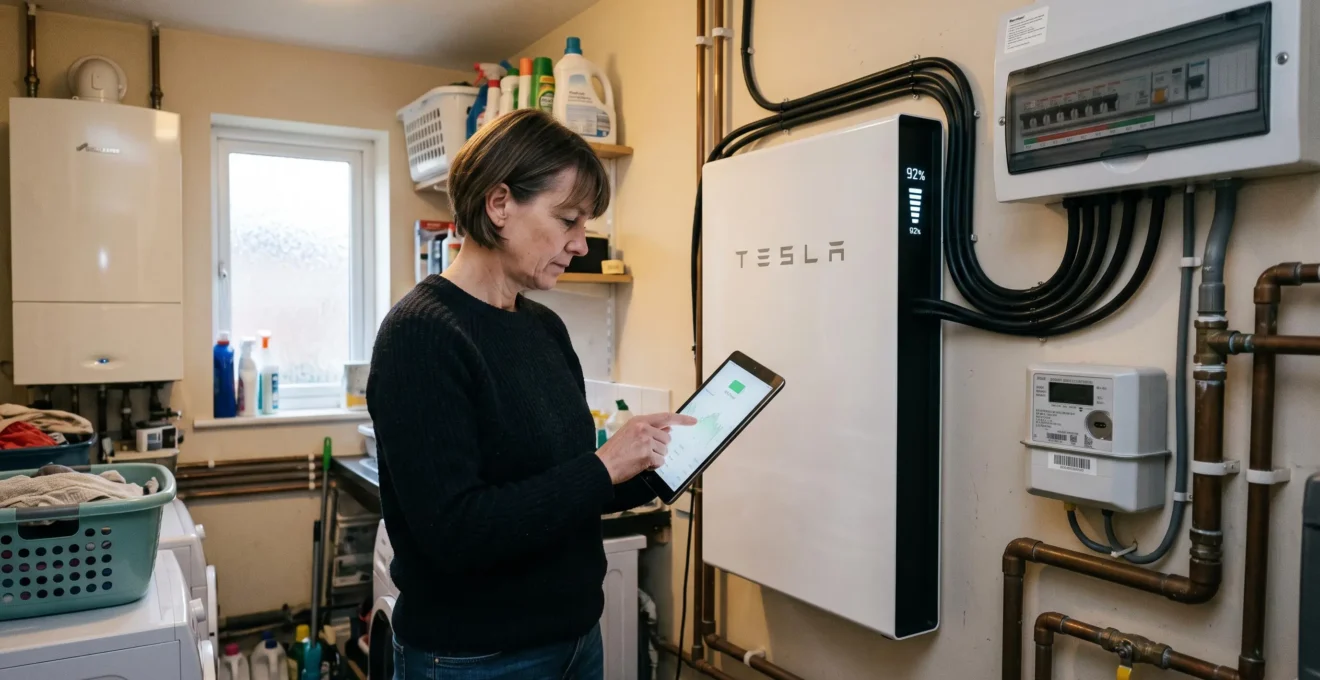
The most effective way to use a home battery is to charge it when electricity is cheapest or surplus solar generation is available, then discharge it when buying electricity from the grid would cost more. That sounds straightforward, but unsuitable charging schedules, excessive backup reserves and poorly coordinated appliances can undermine the financial benefits of an otherwise well-sized system.
For UK households, battery optimisation also means accounting for seasonal solar generation, electricity tariffs and the difference between reducing grid imports and reducing actual electricity bills. A battery that works well on a sunny June afternoon may need entirely different settings during a cloudy December week.
Whether you already have solar panels or are considering your first storage system, the objective is not to keep the battery constantly full or maximise the number of cycles it completes. It is to make every unit of stored electricity financially useful while preserving battery health and retaining enough capacity for backup power where required.
Getting more value from your home battery
- Match charging and discharging schedules to your actual electricity tariff and household consumption, rather than relying on generic installer defaults.
- Account for conversion losses, forgone export income and battery degradation before assuming that every charging cycle saves money.
- Adjust your charging targets as solar generation changes throughout the year.
- Coordinate battery storage, electric vehicle charging and hot water heating so that they do not compete unnecessarily for the same surplus electricity.
- Confirm that your battery supports backup operation before relying on it during a power cut.
- Why Do Home Batteries Often Save Less Than Expected in the First 3 Months?
- How to Set Battery Charge Windows So You Cover the 5–10pm Peak Properly?
- AC-Coupled or DC-Coupled Battery: Which Is Better for a Retrofit Solar System?
- The Battery Cycling Mistake That Can Cut Usable Capacity Faster Than You Think
- When Is the Best Time to Add a Battery: Same Day as Solar or Later?
- Battery, Immersion Diverter, or Smart EV Charging: Which Boosts Self-Use Most?
- Solar Only, Solar Plus Battery, or Generator: Which Covers Evening Use Best?
- What’s the Most Reliable Way to Generate Electricity at Home in the UK Without Regret?
Why Do Home Batteries Often Save Less Than Expected in the First 3 Months?
Home batteries can save less than expected during their first three months because installation forecasts do not always reflect actual household consumption, seasonal solar output, electricity prices or battery operating settings. Before concluding that the hardware is underperforming, use the first 90 days to compare predicted energy flows with measured performance and identify settings that need adjustment.
A quotation may assume that surplus solar electricity is consistently available, that stored energy replaces expensive grid imports and that tariff optimisation works effectively from installation. Export restrictions, unexpected daytime consumption and unsuitable discharge schedules can all reduce the achievable benefit.
Check whether the installer has selected a basic solar self-consumption profile without enabling time-of-use optimisation. This may be suitable for a flat-rate tariff but less effective when cheaper overnight electricity is available. An unnecessarily high minimum charge setting can also leave valuable storage capacity unused.
Seasonal timing matters. A battery installed in autumn may receive considerably less surplus solar generation during its initial operating period than an identical system installed in spring. Compare performance against a seasonally appropriate forecast rather than dividing the estimated annual savings into equal monthly amounts.
The Energy Saving Trust‘s battery storage advice explains that batteries can store both surplus solar electricity and cheaper grid electricity, but that storage introduces energy losses and the resulting savings may not always justify the installation cost.
At the end of the first month, compare energy charged, energy discharged and grid electricity imported during expensive periods. Low charging volumes suggest insufficient energy availability or restrictive settings. Substantial discharge during cheaper periods indicates poor timing. A persistent difference between charging and discharging volumes, after accounting for changes in stored charge, may indicate conversion losses or auxiliary consumption. Use comparable measurement points when assessing these figures.
Five battery settings and performance checks for your first week
- Review the charging schedule against your electricity tariff and save a screenshot showing the permitted charging hours.
- Check the discharge schedule and record when stored electricity is available to household appliances.
- Inspect the minimum state of charge and backup reserve settings, noting the configured percentages and their intended purpose.
- Confirm whether grid charging is enabled or disabled and record the selected operating mode alongside your tariff details.
- Export or record a complete week of battery charging, discharging and grid import data to establish a baseline for subsequent adjustments.
Incorrect settings are a plausible cause of disappointing savings, not proof that every underperforming battery has been configured badly. Once the baseline is established, charging and discharging times become the next practical optimisation target.
How to Set Battery Charge Windows So You Cover the 5–10pm Peak Properly?
Set your battery charging window by working backwards from typical evening electricity demand, available storage capacity and maximum charging power. The battery should contain enough usable energy before the expensive period begins, without unnecessarily filling capacity that could accommodate surplus solar generation. The correct charging hours depend on your tariff, not a universal UK peak period.
Start with half-hourly smart meter readings or inverter monitoring data. Calculate how much electricity your household typically consumes between 5pm and 10pm, paying particular attention to cooking, heating and other substantial evening loads.
Check the timing against your electricity contract. Economy 7 arrangements and fixed dual-rate tariffs have defined cheaper periods, while dynamic tariffs may require more frequent scheduling adjustments. According to Octopus Energy‘s Agile tariff FAQ, Agile prices change every half an hour, with the usual electricity demand rush occurring between 4pm and 7pm.
Once the relevant consumption period is established, calculate the additional energy the battery needs to store. Divide that requirement by its effective charging power to estimate the minimum charging duration. Allow for charging losses, existing battery charge, temperature-related restrictions and any reduction in charging power imposed by the battery management system.
Hypothetical example: calculating a charging window
Suppose a household needs to add 6 kWh of stored energy before the evening and its battery can charge at 3 kW. Ignoring losses and charging restrictions, the theoretical minimum charging time is two hours. The actual window may need to be longer. If substantial solar generation is expected, the overnight charging target could instead be reduced to leave room for a daytime top-up.
A useful operating strategy combines cheap-rate grid charging with a late-morning solar top-up. During winter, grid charging can reduce dependence on expensive evening imports. During sunnier months, leaving spare battery capacity in the morning can improve solar self-consumption. Avoid filling the battery overnight automatically when the following day’s solar generation is likely to cover the requirement.
Verify the schedule by checking battery discharge at around 9pm, provided this remains part of your intended coverage period. If the battery regularly reaches its minimum charge by 7pm, investigate insufficient charging, unexpectedly high consumption or an excessive reserve. If grid imports occur while the battery still contains available energy, check its discharge permissions and output power limit.
Better scheduling can improve the performance of an existing battery, but the system’s inverter architecture also determines how efficiently solar electricity reaches storage and returns to household appliances.
AC-Coupled or DC-Coupled Battery: Which Is Better for a Retrofit Solar System?
An AC-coupled battery is generally the more straightforward retrofit when an existing solar inverter remains functional and compatible with the proposed installation. A DC-coupled battery can be preferable when the solar inverter already supports battery storage or needs replacing. The better financial choice depends on installation costs, conversion efficiency, equipment compatibility and expected battery usage.
In an AC-coupled installation, solar panels continue supplying electricity through their existing inverter. A separate battery inverter manages charging and discharging. This arrangement can avoid replacing functioning solar equipment and allows storage to be added as a separate system.
A DC-coupled installation connects the battery on the direct-current side of a compatible inverter system, commonly through a hybrid inverter. An existing solar installation may therefore require inverter replacement or additional compatible equipment before a battery can be integrated.
The efficiency difference comes partly from the number of conversion stages. When an AC-coupled battery charges from solar panels, electricity is converted from DC to AC by the solar inverter, then back to DC for storage. A DC-coupled arrangement can avoid these intermediate AC conversions, although DC voltage conversion and subsequent discharge losses may still occur.
Compare the complete installation rather than relying exclusively on headline round-trip efficiency figures.
| Retrofit consideration | AC-coupled battery | DC-coupled battery |
|---|---|---|
| Existing solar inverter | Can often remain in place | Must support the proposed battery architecture or be replaced |
| Solar charging pathway | Additional AC/DC conversion stages | Can avoid intermediate AC conversions |
| Equipment space | May require additional inverter space | Potential for more integrated equipment |
| Installation disruption | Usually less intervention in existing solar equipment | Potentially greater modifications to the existing installation |
| Smart tariff operation | Depends on battery controls and compatibility | Depends on hybrid inverter controls and compatibility |
| Existing inverter approaching replacement | Separate storage installation may retain ageing equipment | Opportunity to combine inverter replacement with battery installation |
Ask installers to assess suitable mounting locations, manufacturer-approved clearances, tariff integration and local servicing availability. Also check the original solar installation warranty before authorising modifications. Replacing an inverter or altering existing wiring can complicate warranty responsibilities, depending on the original agreement.
Even an efficient battery architecture cannot compensate indefinitely for unsuitable operating habits. How frequently and deeply the battery cycles also influences its long-term value.
The Battery Cycling Mistake That Can Cut Usable Capacity Faster Than You Think
The battery cycling mistake to avoid is repeatedly charging and discharging large amounts of energy for marginal electricity savings without considering battery wear. Degradation depends on cycling depth, frequency, state of charge, temperature and battery chemistry. A profitable operating strategy must therefore balance immediate tariff savings against the long-term value of usable storage capacity.
Battery capacity gradually declines through both use and ageing. A system that regularly completes demanding cycles may experience different degradation from one operating within a narrower charge range, although the relationship is not identical across battery technologies.
The National Laboratory of the Rockies research summary on residential battery degradation describes simulation-based research published in Applied Energy in 2020. Its battery lifetime models account for state of charge, depth of discharge and temperature, demonstrating why operating conditions and battery chemistry must be considered together rather than applying a universal cycling rule.
To assess whether an additional grid-charging cycle is worthwhile, calculate the avoided electricity import cost, subtract the cost of charging electricity and allow for conversion losses. Then compare the remaining saving with a reasonable allowance for battery wear. For solar charging, include any export payment that would otherwise have been earned.
Hypothetical example: when the tariff spread overstates battery savings
Assume off-peak electricity costs 10p per kWh, peak electricity costs 25p per kWh and battery round-trip efficiency is 90%. Delivering 4.5 kWh from storage requires 5 kWh of charging electricity. Charging costs 50p, while avoiding 4.5 kWh of peak imports saves £1.125. The resulting saving is approximately 63p before battery wear and other operating costs. These figures are illustrative assumptions, not current UK tariff quotations or a measured battery performance result.
Follow manufacturer-recommended operating limits rather than attempting to override the battery management system. Avoid unnecessary full charges where there is no anticipated demand, while retaining any charging routines required for calibration or battery balancing. Configure a suitable backup reserve if resilience is part of the system’s purpose.
10–12 years
The indicative lifespan of residential battery storage, depending on the battery and how it is operated. This is not a guaranteed service life or warranty duration.
Energy Saving Trust, Battery storage
Read the warranty before adopting aggressive tariff arbitrage. Where coverage includes a maximum cycle count or cumulative energy throughput, frequent cycling could exhaust that allowance before the stated calendar warranty period ends. Check the capacity retention conditions and whether the intended operating mode is covered.
Protecting usable capacity helps preserve the investment, but long-term economics also depend on when the battery is purchased and whether installation costs could have been avoided.
When Is the Best Time to Add a Battery: Same Day as Solar or Later?
Installing a battery alongside solar panels can reduce installation costs and simplify equipment integration. Adding storage later allows households to measure real electricity consumption and solar exports before choosing battery capacity. The best timing depends on the installation savings available today, the quality of existing consumption data and the financial value of storing electricity under your tariff.
A combined solar and battery installation avoids some duplicated labour and commissioning work. It also allows the installer to select compatible equipment from the outset, including a hybrid inverter where appropriate. This can be attractive when household consumption patterns are already well understood.
Waiting is particularly useful when electricity demand is expected to change, perhaps because of an electric vehicle, a heat pump or different working arrangements. Measuring actual surplus generation and evening imports can reveal whether a proposed battery would be regularly filled and discharged or remain substantially underused.
£1,500–£10,000
Energy Saving Trust’s indicative residential battery storage cost range, depending on system type and capacity. Its indicative cost for a 5 kWh system is approximately £4,600. Actual installation quotations may differ, and the underlying pricing collection period is unspecified.
Energy Saving Trust, Battery storage
A third option is battery first, solar later. A standalone battery can charge from cheaper grid electricity and discharge when import prices are higher. Whether this arrangement recovers its installation cost depends on the tariff spread, available charging periods, household demand, efficiency and degradation. Solar panels are not a prerequisite for reducing electricity bills through storage.
If solar is installed first, discuss these future-proofing measures with the installer:
- Select an inverter architecture that accommodates the intended future battery arrangement, with documented compatibility.
- Identify a suitable battery location and allow space for additional equipment and cable routes.
- Retain electrical installation certificates, equipment specifications and commissioning records.
- Confirm what additional wiring, grid connection checks and backup equipment may be required when storage is added.
Request an itemised battery price within the solar quotation and a separate retrofit estimate for equivalent equipment. Compare the immediate bundle cost with the potential cost of adding storage in one or two years, including duplicated labour and the savings forgone while waiting. Future equipment prices and available capacity options remain uncertain.
The timing decision becomes more complicated when a household also has an immersion heater or electric vehicle, because these appliances offer alternative ways to use surplus solar electricity.
Battery, Immersion Diverter, or Smart EV Charging: Which Boosts Self-Use Most?
A battery is best suited to shifting surplus solar electricity into evening household consumption. An immersion diverter can use surplus generation to heat stored water, while smart EV charging can absorb substantial daytime generation when the vehicle is connected. The most effective option is the one that matches available solar surplus with a genuine, valuable electricity or heating requirement.
These technologies serve different purposes. A battery stores electrical energy for later use across compatible household loads. An immersion diverter converts surplus electricity into heat in a hot water cylinder. A solar-aware EV charger directs available generation towards a vehicle rather than exporting it or storing it in the home battery.
Before purchasing another device, examine your inverter or export meter data and compare the options against three practical questions.
| Decision criterion | Home battery | Immersion diverter | Smart EV charging |
|---|---|---|---|
| What surplus is available? | Surplus that can be stored for later household demand | Surplus that can meet remaining hot water demand | Surplus available while the vehicle is connected and able to charge |
| When is the flexible load available? | Particularly useful for evening and overnight electricity consumption | When the cylinder can accept additional heat | When the vehicle is parked at home during solar generation |
| What cost should be compared? | Battery installation, losses and degradation | Diverter installation and the cost of alternative water heating | Additional smart charger costs and alternative vehicle charging prices |
| What limits further self-consumption? | Available storage capacity and charging power | Cylinder temperature and hot water demand | Vehicle availability, charging requirements and supported charging power |
Maximising self-consumption does not necessarily maximise savings. Using solar electricity for hot water may offer less financial value than storing it to avoid expensive evening imports, particularly where alternative water heating is inexpensive. Similarly, charging an electric vehicle with surplus solar may be less attractive than exporting that electricity and charging the vehicle later on a cheaper tariff.
The key integration challenge is that all three devices can compete for the same generation. An EV charger may absorb electricity that would otherwise charge the home battery. Depending on the monitoring configuration, it could even trigger unwanted battery discharge. A diverter may heat water before sufficient electricity has been stored for evening consumption.
Establish a surplus energy priority order based on avoided costs, required vehicle charge, hot water demand and battery capacity. Where supported, coordinate inverter, battery and charger controls so that each device responds to the intended energy flow.
An immersion diverter can be a lower-cost initial investment than battery storage, but its value may change when a battery is added. Compare the marginal benefit of each device within the planned complete system, rather than assuming that every improvement in solar self-consumption produces additional savings.
Efficient surplus allocation helps reduce everyday energy costs. Keeping essential appliances running during a power cut, however, requires different equipment capabilities and operating priorities.
Solar Only, Solar Plus Battery, or Generator: Which Covers Evening Use Best?
Solar panels combined with a battery are generally the more suitable option for reducing ordinary evening grid imports, while a generator or a properly configured backup battery can supply electricity during an outage. Solar panels alone provide limited evening coverage and should not be assumed to operate during power cuts. The best arrangement depends on whether savings or resilience is the priority.
During ordinary operation, battery storage shifts earlier solar generation or cheaper grid electricity into later consumption periods. Solar panels without storage can still contribute during daylight hours, including some summer evenings, but their contribution falls as daylight fades.
During a blackout, the situation changes. A conventional grid-connected solar installation normally shuts down when the external supply fails. Adding a battery does not automatically change this behaviour. The equipment must support backup operation and safe electrical isolation from the public grid.
Compare the three options according to the circumstances in which electricity is needed.
| Requirement | Solar only | Solar plus battery | Generator |
|---|---|---|---|
| Routine evening bill reduction | Limited by remaining daylight | Can reduce imports using stored electricity | Generally unsuitable as a routine bill-saving strategy |
| Short power cuts | Conventional grid-connected systems normally shut down | Possible with compatible backup equipment and sufficient charge | Possible with suitable connection and available fuel |
| Extended winter outages | Limited generation and backup capability | Constrained by stored energy and available recharging | Potential for extended operation, subject to fuel, maintenance and operating limits |
| Operating requirements | No routine fuel requirement | Charge management and battery monitoring | Fuel supply, safe operation and maintenance |
If backup power is important, specify islanding capability, backup output power and supported circuits before installation. Some battery systems require a gateway or dedicated backup circuit. Retrofitting this functionality can involve additional equipment or may not be supported by the existing system.
List the essential appliances that must remain operational, such as refrigeration, broadband, heating controls and any necessary medical equipment. Compare their combined running power and energy requirements with the proposed backup supply. Medical devices may also require dedicated backup arrangements specified by their manufacturer or healthcare provider.
For households concerned about prolonged outages, a battery with a dedicated reserve and a compatible generator may be worth considering. The battery can cover shorter interruptions without generator noise or fuel consumption, while the generator can provide additional supply when storage is exhausted. Compatibility must be established professionally. Generators must be operated safely outdoors and must never be connected through an improvised household electrical connection.
Keeping routine savings and emergency supply requirements separate makes it easier to select a dependable home energy system without paying for capabilities that the household does not need.
Key takeaways before choosing your home energy system
- Separate the value of routine electricity savings from the value of emergency power availability, and assess the equipment needed for each.
- Evaluate future appliances and existing equipment compatibility before committing to an installation that may require expensive modifications.
- Use seasonal energy demand, actual export volumes and realistic operating costs to assess lifetime value instead of relying on a headline self-consumption figure.
What’s the Most Reliable Way to Generate Electricity at Home in the UK Without Regret?
For a UK property with a suitable roof, solar PV combined with appropriately sized battery storage can provide a dependable approach to reducing electricity imports, with optional backup equipment for resilience. However, reliable electricity generation, predictable financial returns and dependable emergency supply are different objectives. Avoiding regret requires choosing equipment and operating settings that address the household’s actual priorities.
Start with the property rather than the products. Roof orientation, shading and condition influence the suitability of solar generation. Installing storage cannot compensate for a roof that produces insufficient electricity to support an overly ambitious solar savings forecast.
Next, analyse consumption using smart meter readings and existing solar monitoring data where available. Distinguish daytime demand from evening demand and identify loads that can be moved into cheaper or sunnier periods. Where household electricity use is expected to change, assess those scenarios separately.
Use this information to select the appropriate combination of generation and storage. Battery capacity should reflect the electricity that can realistically be stored and used, while inverter power should accommodate the intended household loads. Include backup capability only after establishing which appliances need to operate during an outage and for how long.
Seasonality is particularly important in the UK. Solar generation is generally greater during summer than winter, while electrically heated homes may experience substantial winter demand. A battery shifts electricity between periods of generation and consumption; it does not create additional electricity or solve a persistent seasonal generation shortfall.
When comparing quotations, request estimates that distinguish direct solar consumption, battery-delivered electricity, grid charging costs, export income and storage losses. Ask how the expected savings change under different consumption patterns and tariff assumptions. Energy Saving Trust recommends obtaining at least three quotations from MCS-certified installers and cautions that battery savings may not always justify the initial investment.
After installation, treat charging targets, discharge permissions and reserve settings as operating decisions, not permanent commissioning defaults. Review them when changing electricity tariffs, introducing substantial new appliances or moving between seasons. Keep the manufacturer’s operating limits and warranty conditions in view when adjusting cycling behaviour.
Start by downloading a representative period of smart meter data and recording your current electricity rates, evening consumption and available solar surplus. Use those measurements to assess your existing settings or request a battery proposal with a realistic operating strategy. The aim is a system that delivers useful savings under everyday conditions, not one that depends on perfect weather, ideal tariffs or unnecessarily aggressive cycling.
Should a home battery discharge electricity to the grid?
Exporting stored electricity may be worthwhile when your export payment exceeds the value of retaining that energy for later household consumption, after accounting for charging costs, losses and battery wear. Check whether your export agreement permits the intended operation, particularly when the battery has charged from the grid. Avoid scheduled exports that subsequently force you to purchase more expensive electricity.
Can a home battery still import electricity when its charge level is high?
Yes. A battery can contain substantial stored energy while the household continues importing electricity. This may occur when appliance demand exceeds the battery inverter’s discharge power, when discharge is restricted by the operating schedule or when battery protection controls limit output. Storage capacity in kWh and discharge power in kW describe different capabilities.
Does charging a home battery to 100% always damage it?
No. The effects of a full charge depend on battery chemistry, temperature, operating conditions and manufacturer-defined limits. The displayed charge percentage may also represent a managed operating range rather than the battery cells’ absolute charge limits. Some systems require periodic full charging for balancing or calibration. Follow the manufacturer’s instructions instead of applying a universal maximum charge setting.
Do home battery charging schedules need adjusting when the clocks change?
They may do. Check whether your inverter or battery controller adjusts automatically between Greenwich Mean Time and British Summer Time, and confirm how your electricity supplier defines its tariff periods. Compare scheduled charging activity with actual smart meter readings after the clock change to ensure that the battery is still charging at the intended rates.
Can increasing battery capacity reduce the return on investment?
Yes. Additional storage capacity increases investment costs but may deliver little extra financial benefit if surplus generation, cheap-rate charging opportunities or household demand are insufficient to use it. Before expanding an existing battery, establish how frequently it reaches full charge and how often it runs out of available energy while expensive grid imports are still occurring.