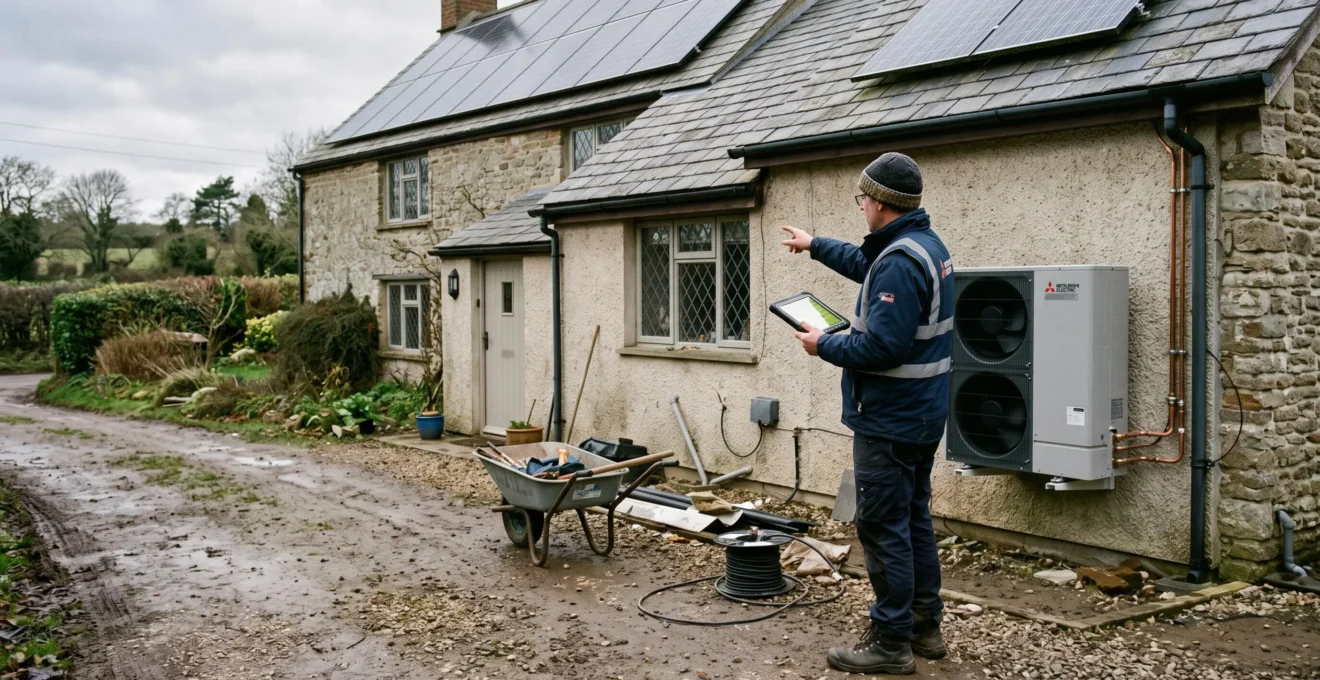
The most sustainable energy source is not necessarily the one advertised as renewable, carbon neutral or locally produced. It is the option that delivers a demonstrable reduction in environmental impact over its lifetime while meeting the energy needs of a particular property.
For UK households and small businesses, that distinction matters. Rooftop solar can reduce dependence on imported grid electricity, heat pumps can replace fossil fuel heating, and renewable electricity tariffs can support demand for renewable generation. Yet each option has limitations involving manufacturing, operating costs, infrastructure or the credibility of its environmental claims.
A renewable electricity source can still carry an environmental footprint. Equally, an efficient technology may deliver disappointing results when installed in an unsuitable building.
Choosing sustainable energy therefore requires more than comparing advertised carbon savings. The assessment should account for the full life cycle, actual energy consumption, property constraints and the evidence behind supplier claims. The aim is a measurable improvement rather than an apparently perfect environmental solution.
What makes an energy choice genuinely sustainable?
- Compare manufacturing, transportation, operation and disposal rather than relying on emissions at the point of use.
- Match heating and electricity technologies to your building, consumption patterns and available budget.
- Check whether renewable energy claims are independently supported and whether they demonstrate environmental benefits beyond certification.
- Reduce avoidable energy demand before committing to equipment that may be unnecessarily expensive or oversized.
- Why Can the “Greenest” Option Change Once You Count Manufacturing and Transport?
- How to Vet a “Sustainable” Claim Using 4 Questions in Under 5 Minutes?
- Solar, Heat Pump, Biomass, or Green Tariff: What Fits a Rural UK Home Best?
- The “Single Metric” Mistake That Makes a Project Look Sustainable but Isn’t
- When Should You Switch to a Green Tariff Before Investing in Equipment?
- How to Compare Two Low-Carbon Options Using a 5-Point Boundary Checklist?
- How to Choose a Green Energy Option if You Rent and Can’t Alter the Property?
- Which Green Energy Option Makes Sense if You Can’t Install Solar on Your Roof?
Why Can the “Greenest” Option Change Once You Count Manufacturing and Transport?
The greenest energy option can change when manufacturing, raw material extraction, transport and disposal enter the comparison because operational emissions represent only part of its environmental footprint. A technology with very low emissions during use may carry substantial upstream impacts, while another may deliver greater lifetime benefits under different operating conditions or electricity supply assumptions.
A point-of-use assessment examines emissions associated with operating a technology. A cradle-to-grave assessment extends the boundary to raw materials, manufacturing, transportation, installation, maintenance and eventual disposal. Comparing figures calculated using different boundaries can produce misleading conclusions.
Consider a heat pump installed in a UK home. Its manufacturing footprint is incurred largely before operation, while its subsequent indirect emissions depend on electricity consumption and the carbon intensity of the grid. If grid electricity becomes cleaner over its operating life, its annual operational emissions can decrease. A biomass boiler remains dependent on combustion, fuel sourcing and delivery, although improvements in its supply chain can also change its footprint.
Imported solar panels and biomass pellets illustrate another distinction: neither renewable origin nor geographical proximity establishes overall sustainability. Manufacturing processes, transport methods and raw material sourcing all influence the result. Transport alone is not sufficient to determine which product performs better.
According to the CMA’s Green Claims Code guidance, environmental claims should account for relevant life-cycle impacts and avoid concealing significant disadvantages elsewhere.
Ask equipment suppliers for a product-specific life-cycle assessment, its geographical assumptions and its treatment of component replacement and end-of-life management. A generic industry figure may not represent the equipment being offered.
Carbon emissions are also only one environmental dimension. Biomass production can affect land use and biodiversity, while batteries and photovoltaic equipment create demand for mineral extraction and processing. Low carbon and sustainable are not interchangeable descriptions.
These boundaries establish what should be measured. The next challenge is determining whether the supplier’s evidence supports the environmental benefit being advertised.
How to Vet a “Sustainable” Claim Using 4 Questions in Under 5 Minutes?
A quick sustainability screening requires four questions: what environmental benefit is claimed, which life-cycle stages are included, who has verified the evidence and what has been excluded? Together, these questions help distinguish measurable environmental performance from broad marketing language, although a detailed assessment may still be necessary before committing to an expensive installation.
- What exactly is being claimed? Establish whether the claim concerns renewable origin, reduced greenhouse gas emissions, energy efficiency or wider environmental performance.
- What is the assessment boundary? Determine whether the evidence covers manufacturing, operation, transport and disposal or only a selected stage.
- Who verified the claim? Request the certification body, applicable standard and evidence that the certification covers the specific product or service.
- What has been excluded? Identify omitted emissions, environmental impacts, operating assumptions or dependencies that could materially alter the conclusion.
The fourth question is particularly revealing. An accurate statement about one environmental benefit can create an inaccurate impression of overall sustainability when important disadvantages are omitted.
1 REGO per MWh
Each Renewable Energy Guarantee of Origin represents one megawatt hour of eligible renewable electricity generation. It demonstrates renewable origin, not whether a customer’s tariff financed additional generation.
Different certifications answer different questions. MCS certification concerns relevant installation and product standards, while FSC certification can help substantiate responsible forest sourcing claims. Neither automatically establishes the lowest overall environmental footprint.
The following questions translate common marketing expressions into requests for evidence.
| Marketing claim | Question to ask the supplier |
|---|---|
| Eco-friendly | Which environmental impacts have been assessed, and against what alternative? |
| Carbon neutral | Which emissions are included, and how much of the claim depends on carbon offsets? |
| 100% renewable electricity | How is renewable generation matched to consumption, and does the tariff support additional capacity? |
| Green gas | Does the claim concern renewable gas, certificates, offsets or a combination of these? |
Passing this initial screening establishes credibility, not suitability. A verified environmental benefit must still be relevant to the building and energy demand it is intended to serve.
Solar, Heat Pump, Biomass, or Green Tariff: What Fits a Rural UK Home Best?
For a rural UK home, the most suitable green energy option depends on the existing heating system, insulation, available installation space, electricity connection and consumption patterns. Solar panels can complement a heat pump, while a renewable tariff can cover remaining electricity demand. Biomass deserves consideration where fuel sourcing, storage and local air quality can be satisfactorily addressed.
Rural properties outside the gas network may rely on oil, LPG or direct electric heating. Older buildings can also present higher heat demand, restricted installation space or construction characteristics that require carefully selected improvements. These conditions should inform the comparison before equipment is chosen.
- Solar photovoltaic panels: assess roof condition, shading, orientation, electricity consumption during generation hours and potential export restrictions. Installation costs are incurred upfront, while financial benefits depend partly on how much electricity is used on site.
- Heat pumps: assess building heat loss, radiator or underfloor heating requirements, electrical capacity and installation space. Check current Boiler Upgrade Scheme eligibility in England and Wales, or the relevant support arrangements elsewhere in the UK.
- Biomass boilers: include fuel storage, delivery access, maintenance, combustion emissions and reliable sourcing in the assessment.
- Renewable electricity tariffs: compare contractual costs, renewable sourcing evidence and commitments to additional generation. They require no on-site generating equipment but do not independently replace fossil fuel heating.
Where building heat loss is excessive, targeted insulation and draught reduction can improve the conditions under which a new heating system operates. This does not mean every property needs comprehensive renovation before installing a heat pump; a heat-loss assessment should determine the necessary work.
A practical decision sequence is to address avoidable heat loss, select an appropriate heating system, assess on-site electricity generation and then optimise the electricity tariff. A household can switch tariffs earlier where this is financially and contractually sensible.
Combining technologies may produce a better outcome than selecting one in isolation. Solar generation can supply part of a heat pump’s electricity demand, although seasonal differences between solar output and heating requirements limit the overlap.
Biomass may be appropriate where electrification is impractical and a credible fuel supply is available. Responsible sourcing certification, fuel characteristics and local air-quality considerations remain essential because renewable combustion is not emission-free.
The preferred combination should emerge from property-specific evidence, including installation quotations, operating requirements and realistic lifetime costs.
The “Single Metric” Mistake That Makes a Project Look Sustainable but Isn’t
An energy project can perform well against one indicator while delivering disappointing results elsewhere. Carbon intensity, energy efficiency, renewable content and financial payback each measure different outcomes. A credible sustainability assessment establishes several decision criteria in advance so that an impressive headline figure cannot conceal unsuitable operating conditions or important environmental disadvantages.
For a heat pump, the Seasonal Coefficient of Performance (SCOP) describes seasonal heating efficiency under specified conditions. It does not independently establish the total energy consumption of a particular building. Heat demand, system design and operating temperatures remain important.
A solar installation presents a different problem. A favourable payback estimate may depend on an optimistic assumption about daytime electricity consumption. If the household or business exports more generation than anticipated, the financial outcome can differ from the quotation.
Similarly, a tariff’s renewable electricity percentage describes renewable sourcing but does not establish additionality: whether the purchasing arrangement contributes to renewable generation that would otherwise not occur.
Use a multi-criteria scorecard to assess the project rather than treating one indicator as a complete verdict.
| Assessment criterion | Evidence to examine | Potential blind spot |
|---|---|---|
| Lifetime carbon outcome | Comparable life-cycle emissions assessments | Manufacturing or replacement emissions omitted |
| Total ownership cost | Installation, energy, maintenance and replacement costs | Optimistic energy price assumptions |
| Practical property fit | Heat loss, installation space and electricity connection | Performance estimates based on unsuitable conditions |
| Flexibility and reversibility | Contract terms, upgrade options and equipment dependencies | Long-term commitments that restrict future choices |
The Competition and Markets Authority has identified potentially misleading practices in the marketing of green heating and insulation products, including headline pricing and presentation of government funding. Its findings support the need to examine quotations rather than assume that advertised outcomes apply to every property.
Request the assumptions behind every material performance figure, including energy prices, system efficiency, installation conditions and self-consumption. Recalculate the comparison using your actual bills and a realistic range of future conditions.
A proposal that remains attractive across several relevant measures provides a stronger basis for investment than one whose appeal depends entirely on a favourable headline statistic.
When Should You Switch to a Green Tariff Before Investing in Equipment?
Switching to a credible green electricity tariff can be an appropriate first step when installing equipment is financially premature, the property requires further assessment or the expected occupancy period is uncertain. A suitable tariff can support renewable electricity purchasing without substantial installation work, although switching alone does not guarantee an immediate reduction in physical grid emissions.
This approach is particularly relevant to renters, small businesses operating from leased premises and homeowners preparing for building improvements. It allows electricity procurement to be considered separately from longer-term equipment decisions.
The distinction between renewable electricity purchasing and physical electricity supply is important. Properties connected to the grid receive electricity from the wider network. A renewable tariff does not create a dedicated physical flow of renewable electricity to an individual customer.
As Ofgem‘s REGO framework demonstrates, renewable certificates establish generation origin. They do not independently prove that choosing a particular tariff has caused new renewable infrastructure to be built.
To assess renewable generation additionality, ask the supplier whether it:
- Purchases renewable electricity through direct contractual arrangements with generators.
- Supports identifiable new renewable generation projects.
- Publishes evidence of its investment or procurement commitments.
- Explains the respective roles of electricity purchasing and renewable certificates.
Direct purchasing arrangements may provide stronger evidence of support for renewable generators, but they should not automatically be treated as proof of additional capacity.
Electrification and cleaner electricity generation can complement each other. Replacing fossil fuel heating with an efficient electric system addresses direct fuel combustion, while credible renewable procurement can support the transition towards cleaner electricity. The appropriate timing depends on the building and the environmental evidence; changing tariffs first is not an engineering prerequisite.
Consider moving from tariff selection to equipment investment when occupancy becomes more secure, necessary building improvements are complete, existing heating equipment approaches replacement or verified financial support improves project affordability.
A tariff can provide a useful bridge while more substantial improvements are evaluated. Its environmental contribution should remain proportionate to what the supplier can actually demonstrate.
How to Compare Two Low-Carbon Options Using a 5-Point Boundary Checklist?
Two low-carbon energy options can be compared fairly only when they use equivalent assessment boundaries. Establish the same time horizon, emissions coverage, cost categories, energy market assumptions and property conditions for both alternatives. This prevents one technology from appearing more sustainable simply because its calculation excludes costs or environmental impacts included in the competing proposal.
Start by defining the energy service being compared. For a heating system, that means delivering the required indoor comfort and hot water rather than comparing technologies solely by equipment capacity or fuel consumption.
The following hypothetical example illustrates how changing assessment boundaries can alter a decision without assuming that either technology always performs better.
Hypothetical comparison: a heat pump versus a biomass boiler
A rural homeowner receives two proposals. The biomass quotation emphasises renewable fuel, while the heat pump quotation emphasises operating efficiency. Neither headline establishes the environmental performance or ownership cost of the complete system.
A comparable assessment introduces heat pump manufacturing emissions, electricity carbon intensity, biomass sourcing, fuel deliveries, maintenance and the heat demand of the same property. If electricity becomes less carbon-intensive, the heat pump’s operational emissions may improve. If its installation requires substantial additional work, the financial comparison may change. Biomass performance remains sensitive to fuel characteristics, sourcing and combustion impacts.
The preferred option cannot be established without comparable inputs. The purpose of the exercise is to expose factors omitted from the original quotations.
Use UK-relevant greenhouse gas conversion factors, applicable grid carbon intensity data, property heat-loss calculations and documented installation performance assumptions. Relevant MCS documentation can help assess design and performance information where available.
The CMA’s compliance advice for green heating and insulation products also provides a useful reference when examining supplier quotations, headline prices and representations concerning financial support.
Create a like-for-like energy comparison in five steps
- Fix a common assessment period. Record the start date, end date and any equipment replacements expected within that period.
- Define the emissions boundary. Produce a table showing which manufacturing, transport, operational, maintenance and disposal emissions are included for each option.
- Establish the total ownership cost. Prepare a comparable breakdown of purchase, installation, running, servicing, replacement and end-of-life costs.
- Align electricity and fuel assumptions. Record the source and date of energy prices and carbon factors, then prepare alternative scenarios for plausible changes.
- Standardise the property conditions. Attach the same annual energy demand, heat-loss assessment, occupancy assumptions and installation constraints to both proposals.
Complete a sensitivity test by changing future energy prices, electricity carbon intensity or property consumption individually. If small changes reverse the preferred option, the decision is sensitive to uncertainty rather than strongly supported by the available evidence.
Where environmental or financial differences remain uncertain, favour decisions that are robust across plausible conditions and avoid presenting an estimated outcome as a guaranteed result.
How to Choose a Green Energy Option if You Rent and Can’t Alter the Property?
Renters can pursue greener energy by changing electricity procurement where they control the account, reducing avoidable consumption and choosing efficient appliances without permanently altering the building. Structural insulation, fixed heating equipment and on-site generation generally require landlord involvement. The most practical approach separates immediately available actions from improvements that depend on property ownership or consent.
In England, tenants who pay their energy supplier directly can change supplier or tariff, including when using a prepayment meter. Where the landlord pays the supplier, tenants cannot independently arrange the switch.
“You can switch energy supplier or tariff if you pay your energy supplier directly for your gas or electricity.”
This guidance applies specifically to England. Tenants in Scotland, Wales and Northern Ireland should consult the corresponding local guidance. Commercial tenants should examine their lease and energy supply arrangements separately.
Beyond procurement, reducing unnecessary electricity consumption offers an environmental benefit without waiting for major building work. Plug-level energy monitoring can identify appliances consuming more electricity than expected, while consumption records help distinguish essential demand from avoidable waste.
When replacing an appliance, compare expected electricity consumption rather than purchase price alone. Where practical, shifting flexible consumption to periods of lower grid carbon intensity may also improve the emissions profile of electricity use. Any plug-in monitoring device should be appropriately rated for the connected appliance.
For permanent improvements, present the landlord with a specific proposal covering potential Energy Performance Certificate (EPC) improvements, property benefits, installation requirements and applicable funding opportunities. Verify current scheme eligibility before assuming that a tenant or landlord can access financial support.
Before entering a new electricity contract, check account responsibility, exit fees, meter compatibility, tenancy conditions and the expected moving date. These details determine whether the arrangement remains financially and practically suitable.
Limited control over the building does not eliminate every opportunity to reduce environmental impact. It changes which interventions are accessible and how permanent an investment should be.
Key takeaways
- Separate access to renewable generation from ownership of generating equipment: a property does not need its own solar panels to pursue renewable electricity procurement.
- When installation space is restricted, prioritise improvements that address the property’s largest remaining energy demand.
- Assess alternative generation arrangements according to contractual rights, environmental evidence and long-term financial commitments.
Which Green Energy Option Makes Sense if You Can’t Install Solar on Your Roof?
If rooftop solar is unsuitable, credible alternatives include renewable electricity tariffs, community energy participation, ground-mounted solar where space permits and efficient electric heating. Small businesses may also consider off-site renewable electricity purchasing. The appropriate choice depends on why rooftop installation is unavailable, whether alternative generation is physically feasible and which energy demands offer the greatest reduction opportunity.
First, establish why the roof has been ruled out. Structural limitations, ownership restrictions, persistent shading and planning constraints are different problems. A roof with less favourable orientation or partial shading may still support worthwhile generation, subject to a site-specific yield assessment.
Where rooftop installation is genuinely impractical, consider alternatives in order of accessibility:
- Verified renewable electricity tariffs: examine generation sourcing, certificate arrangements and evidence of investment in additional renewable capacity without committing to physical equipment.
- Community energy and shared solar projects: establish whether participation involves investment, electricity purchasing or another financial arrangement. Check whether the claimed environmental benefits are attributable to participants.
- Heat electrification: assess whether a suitably designed heat pump could replace fossil fuel heating independently of rooftop solar generation.
- Off-site renewable procurement for SMEs: investigate whether a renewable power purchase agreement or another contractual arrangement is suitable for the business’s consumption and purchasing commitments.
Properties with available land may also accommodate ground-mounted photovoltaic systems. Garages, agricultural buildings and other outbuildings can provide alternative installation surfaces. Shared generation arrangements between neighbouring properties may be another possibility where ownership, electricity distribution and contractual requirements can be resolved.
These options require site-specific checks covering planning requirements, structural suitability where applicable, electricity connection arrangements and financial feasibility. Relevant conditions vary across UK jurisdictions and individual properties, so permissions and network requirements should be confirmed before installation commitments are made.
Community and off-site generation arrangements deserve the same scrutiny as equipment purchases. Ownership of renewable generation, entitlement to its environmental attributes and financial participation are not necessarily equivalent. Establish precisely what the arrangement delivers and avoid assuming that every participant receives a separate environmental benefit from the same generation.
Start with your actual electricity and heating consumption, identify the constraints of your property and request documented evidence for the most feasible alternatives. Choose the combination that delivers a defensible environmental improvement, manageable lifetime costs and sufficient flexibility for future changes, rather than the option with the strongest renewable energy branding.
What is the difference between renewable energy and sustainable energy?
Renewable energy comes from resources replenished through natural processes, such as sunlight, wind and certain biological resources. Sustainable energy also considers life-cycle emissions, resource consumption, ecosystem impacts and long-term viability. An energy source can be renewable without meeting every relevant sustainability criterion.
Does adding battery storage automatically make solar electricity more sustainable?
No. Battery storage can increase the amount of solar electricity used on site and provide greater flexibility, but it also introduces manufacturing impacts, charging losses and eventual replacement requirements. Assess whether the additional environmental and financial benefits justify these impacts under your actual consumption patterns.
Can a small business report zero electricity emissions after purchasing a renewable tariff?
A renewable tariff alone is insufficient to substantiate an unrestricted zero-emissions claim. Any reported electricity emissions figure must follow the applicable greenhouse gas accounting methodology and contractual evidence requirements. A market-based electricity emissions figure should not be confused with the physical emissions of grid electricity or the organisation’s complete environmental footprint.
Should working heating equipment be replaced immediately with a low-carbon alternative?
Not necessarily. Compare the future emissions and operating costs of retaining the existing equipment with the manufacturing, installation and operating impacts of its replacement. Equipment condition, remaining service life, building readiness and available financial support can influence whether immediate or planned replacement is preferable.
What if a supplier cannot provide a complete life-cycle assessment?
Request the evidence that is available, identify the missing assessment stages and distinguish independently verified information from supplier estimates. An incomplete assessment does not establish that a product is environmentally harmful, but it limits the strength of any comparative sustainability claim. Avoid treating undocumented advantages as proven benefits.