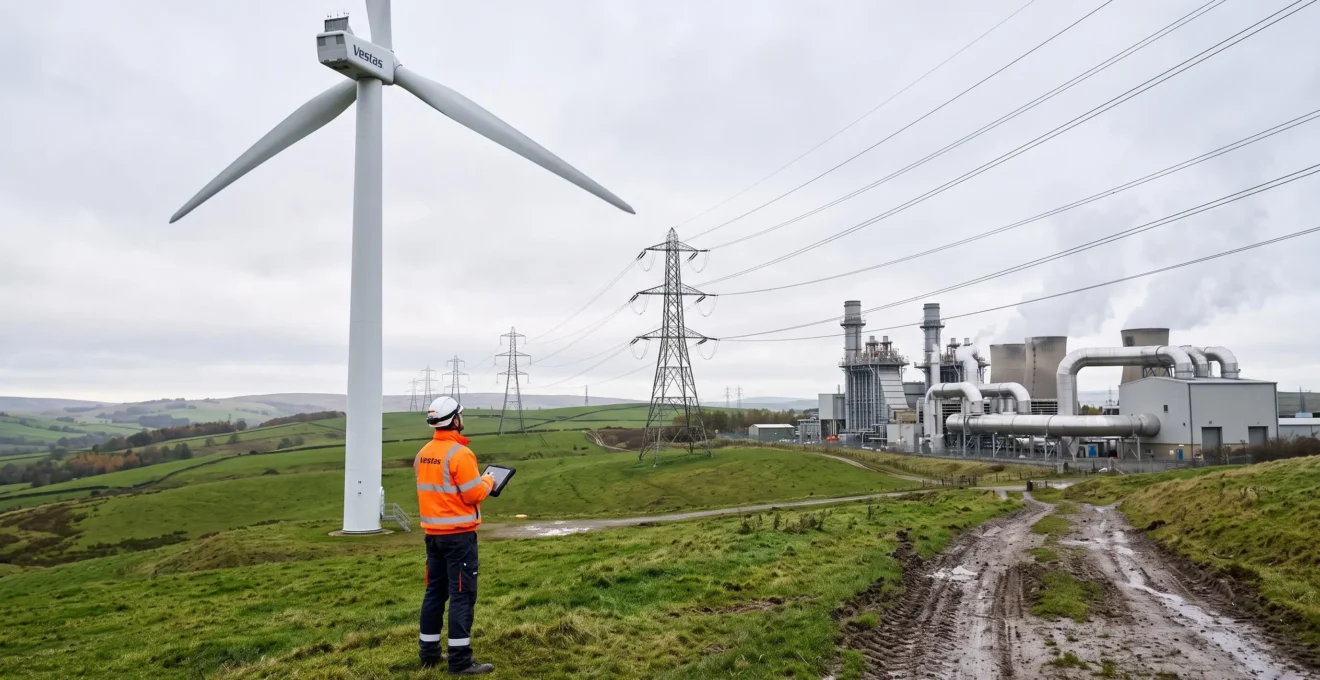
A decarbonised energy source supplies electricity, heat or another useful form of energy with substantially lower greenhouse gas emissions than a conventional fossil-fuel alternative. It does not necessarily produce zero emissions, qualify as renewable or eliminate the environmental impact of its supply chain.
In UK practice, wind, solar and nuclear power can all qualify as low-carbon sources. Biomass, hydrogen and fossil-fuel generation equipped with carbon capture and storage require closer examination because their environmental performance depends heavily on how fuels are produced, transported and used.
For households and small businesses, the difficulty is that suppliers do not always describe emissions using equivalent accounting boundaries. A renewable electricity tariff, a low-carbon heating system and a carbon-neutral gas contract can represent fundamentally different environmental outcomes.
The most credible assessment therefore starts with measurable emissions reductions rather than marketing terminology. Understanding what has been counted, what has been excluded and how the energy is supplied makes it possible to distinguish genuine decarbonisation from an improvement that exists principally on paper.
What makes an energy source genuinely low-carbon?
- Decarbonised energy is defined by reduced greenhouse gas emissions, not simply by whether its source is renewable.
- Credible comparisons account for operational emissions, fuel supply chains, equipment manufacturing and the useful energy delivered.
- Renewable certificates and carbon offsets serve different accounting purposes; neither automatically demonstrates a physical reduction in emissions.
- The most suitable household or business option depends on energy demand, property constraints, procurement arrangements and operating conditions.
- Why Can a “Low-Carbon” Source Still Have High Emissions Upstream?
- How to Compare Two Low-Carbon Options Using a 5-Point Boundary Checklist?
- Nuclear vs Renewables vs CCS: Which Delivers Firm Low-Carbon Power Best?
- The Offset Mistake That Makes a “Net Zero” Claim Fall Apart Under Scrutiny
- When Should You Recalculate Your Carbon Impact: Quarterly or Annually?
- Why Can the “Greenest” Option Change Once You Count Manufacturing and Transport?
- Why Can “100% Renewable Electricity” Still Feel Confusing on the UK Grid?
- Which Green Energy Option Makes Sense if You Can’t Install Solar on Your Roof?
Why Can a “Low-Carbon” Source Still Have High Emissions Upstream?
A low-carbon energy source can have substantial upstream emissions because its operation represents only part of its environmental impact. Fuel extraction, processing, electricity generation, transport and land-use change can release greenhouse gases before energy reaches the consumer. A claim based exclusively on point-of-use emissions may therefore exclude significant parts of the supply chain.
An electric vehicle produces no tailpipe emissions, but charging it can involve fossil-fuel electricity generation. A hydrogen fuel cell releases no carbon dioxide during normal operation, yet the hydrogen may have been produced using natural gas or carbon-intensive electricity. Biomass presents a different complication: burning wood releases carbon dioxide directly, even when biogenic emissions receive separate accounting treatment.
The system boundary determines which stages are included in an emissions assessment. Locally sourced wood residues and imported pellets, for example, can have different carbon footprints depending on forest management, drying requirements, processing methods and transport distances. Local sourcing alone does not guarantee lower lifecycle emissions.
The UK National Policy Statement for renewable energy infrastructure (EN-3), applicable in England and Wales, identifies cultivation, processing, transport and direct land-use change as relevant components of biomass sustainability assessments under specified support schemes.
Reporting boundaries also matter when interpreting official data. The UK Government’s 2026 greenhouse gas reporting conversion factors distinguish emissions across Scope 1, Scope 2 and Scope 3. Individual electricity or fuel factors should not automatically be interpreted as complete lifecycle assessments.
A practical test is to ask three questions whenever a supplier describes an energy source as low-carbon:
- Which activities and greenhouse gases are included?
- What reporting period or expected operating lifetime does the assessment cover?
- Where does the measurement begin and end within the energy supply chain?
Once the boundaries are understood, competing technologies can be assessed on an equivalent basis rather than through isolated emissions figures.
How to Compare Two Low-Carbon Options Using a 5-Point Boundary Checklist?
Two low-carbon energy options can be compared credibly by checking their emissions scope, fuel inputs, embodied carbon, generation timing and reliance on environmental certificates or offsets. These five criteria expose differences that headline emissions figures can conceal. Both options must also be assessed against the same useful energy requirement and a comparable operating period.
Consider a heat pump and a biomass boiler. The heat pump consumes electricity and transfers heat into a building without burning fuel on site. Its operational footprint depends on electricity generation and seasonal efficiency. The biomass boiler depends on combustion, feedstock sourcing and the emissions associated with preparing and delivering its fuel.
Comparing only fossil carbon dioxide released directly inside the property would overlook important differences. A fuller comparison considers electricity generation, biogenic carbon, fuel processing, equipment manufacturing and the amount of useful heat each system delivers.
Similarly, on-site solar generation and a renewable electricity tariff can both support a household’s renewable energy objectives, but their claims describe different arrangements. Solar produces electricity at the property, whereas a tariff may rely on contractual procurement and renewable generation certificates.
A certificate-backed tariff should not automatically receive the same assessment as physical on-site generation. Ofgem‘s REGO framework supports fuel-mix disclosure, but a certificate alone does not establish additional generation or simultaneous matching with customer demand.
Complete a five-point carbon boundary comparison
- Identify the emissions scope and reporting period for each option. Record the included and excluded emissions categories in a comparison sheet.
- Trace the main fuel or electricity inputs back to their production methods. Produce a written summary of each option’s energy supply chain.
- Request product-specific manufacturing, installation and replacement emissions information. Retain the lifecycle assessment or explicitly record missing evidence.
- Compare the timing of energy generation with expected consumption. Record the matching period and identify any reliance on grid electricity or backup generation.
- Separate physical emissions reductions from certificates and offsets. Obtain a written breakdown of the instruments supporting each environmental claim.
The resulting comparison may change the initial ranking, particularly where one option excludes emissions that the other includes. Any missing evidence should remain visible rather than being treated as zero emissions.
Applying this method to electricity generation also reveals why low-carbon output and reliable availability are separate characteristics.
Nuclear vs Renewables vs CCS: Which Delivers Firm Low-Carbon Power Best?
Nuclear power provides relatively steady low-carbon electricity, while wind and solar offer weather-dependent generation with very low operational emissions. Gas generation with carbon capture and storage can provide controllable output but retains residual and upstream emissions. The most suitable source of firm low-carbon power depends on reliability requirements, delivery times, system costs and lifecycle carbon performance.
Low-carbon and renewable are not interchangeable classifications. Nuclear power uses a finite fuel resource, and conventional gas generation remains fossil-based even when fitted with carbon capture and storage (CCS). Both can contribute to decarbonisation without qualifying as renewable generation.
The distinction matters when assessing electricity procurement, renewable energy targets and the evidence behind supplier environmental claims. The following comparison separates generation characteristics from the broader requirements of a reliable electricity system.
| Criterion | Nuclear | Wind and solar | Gas with CCS |
|---|---|---|---|
| Output availability | Relatively steady, subject to maintenance and outages | Dependent on weather and daylight | Controllable, subject to plant and capture-system availability |
| Renewable status | Non-renewable | Renewable | Non-renewable when fuelled by fossil gas |
| Delivery considerations | Complex construction and long development periods | Project development, planning and grid connections | Generation, capture, transport and storage infrastructure |
| Principal emissions considerations | Construction, fuel cycle and decommissioning | Manufacturing, installation and equipment replacement | Uncaptured emissions, capture energy demand and upstream methane |
| Contribution to system reliability | Steady generation | Variable generation requiring system-wide balancing | Potentially dispatchable emissions-reduced generation |
Firm electricity supply requires sufficient available capacity when demand occurs. Wind and solar can contribute substantially to a reliable system when combined with storage, flexible demand, interconnection and other generation. Nuclear offers steady production, although individual reactors remain subject to outages and lengthy, capital-intensive construction programmes.
Large offshore wind and nuclear projects can both face multi-year development and delivery schedules. UK CCS initiatives such as HyNet and the East Coast Cluster also involve coordinated industrial infrastructure, including carbon dioxide transport and permanent storage. Proposed capacity should not be confused with operational capacity.
The central CCS limitation is that capturing carbon dioxide at a power station does not eliminate every greenhouse gas emission. Residual combustion emissions, additional energy requirements and methane released during natural gas production and transport remain relevant to the lifecycle assessment.
For a household choosing a tariff, the priority is credible procurement evidence. For infrastructure investment or energy policy, generation availability, construction risk and whole-system costs require separate consideration.
The Offset Mistake That Makes a “Net Zero” Claim Fall Apart Under Scrutiny
The fundamental mistake in an offset-based net zero claim is treating purchased carbon credits as evidence that an energy source no longer produces emissions. Offsetting and physical decarbonisation are different activities. A fossil-fuel energy contract can remain emissions-intensive even when its supplier purchases credits intended to compensate for the associated greenhouse gases.
Carbon credits may represent emissions avoided elsewhere or carbon dioxide removed from the atmosphere. Neither mechanism changes the quantity of carbon dioxide released when a customer burns natural gas. The underlying emissions should therefore remain identifiable before any compensation is considered.
The credibility of a carbon credit depends on several characteristics:
- Additionality: the claimed climate benefit would not have occurred without the intervention.
- Permanence: any stored carbon remains secured for the relevant period, with reversal risks addressed.
- Verification: the emissions benefit is measured and supported by credible evidence.
- Protection against double counting: the same climate benefit is not claimed multiple times in an incompatible manner.
Even a credible credit does not establish that the energy source itself has become low-carbon. This distinction is particularly important for claims that depend on future removals, speculative projects or avoided emissions rather than the neutralisation of residual emissions through removals.
“avoid using unqualified ‘carbon neutral’ or ‘net zero’ claims.”
The UK advertising guidance advises businesses to explain the extent to which environmental claims depend on emissions reductions or offsetting. Future net zero commitments should be supported by a verifiable strategy. The guidance also discusses a December 2023 ASA ruling in which insufficient explanation of a carbon-neutral business claim resulted in the advertisement being considered misleading.
For an SME, a useful starting point is to request separate figures for direct emissions, purchased energy and relevant value-chain emissions. Where a supplier cannot explain these boundaries or distinguish its own operational footprint from the emissions associated with customer energy use, the claim remains difficult to substantiate.
Offsets may have a supplementary role, but an energy decision should first be evaluated against its underlying greenhouse gas emissions before credits are deducted.
When Should You Recalculate Your Carbon Impact: Quarterly or Annually?
Annual carbon footprint recalculation is generally suitable for UK households with stable energy consumption and unchanged heating arrangements. Quarterly reviews become more useful when a business or household changes supplier, installs new equipment or materially alters its electricity demand. More frequent calculations are worthwhile only when the consumption data and emissions factors support the additional detail.
For a conventional annual assessment, electricity and fuel consumption can be multiplied by the relevant greenhouse gas conversion factors. The resulting emissions should be recorded with their reporting year, units and accounting boundaries. The UK Government’s annual conversion factors provide an established basis for organisational activity-based reporting.
However, the carbon intensity of electricity generation varies throughout the day and across seasons. Wind availability, solar output, demand and the contribution of different power stations affect the generation mix. An annual factor therefore describes an averaged reporting outcome rather than the precise emissions associated with electricity consumed at a particular moment.
Time-sensitive electricity use, such as electric vehicle charging, battery charging or flexible industrial demand, can be assessed separately using suitable time-resolved carbon intensity data. Average grid intensity and marginal emissions are different measures: the former describes the generation mix, while the latter estimates the emissions consequences of a change in demand.
Rather than relying on an arbitrary reporting calendar, use the following circumstances to determine when an updated calculation is justified:
- Annually, when consumption patterns and energy arrangements remain broadly stable.
- Quarterly, when an SME is monitoring reduction targets or experiencing substantial operational changes.
- After a material change, such as replacing a boiler, installing a heat pump, changing electricity procurement arrangements or adopting a revised reporting methodology.
- At finer time intervals, when flexible electricity consumption is being assessed against appropriate time-resolved emissions data.
A supplier switch may affect a contractual emissions assessment without changing the location-based grid factor. Likewise, revised national factors may justify an updated calculation even when the amount of energy consumed remains unchanged.
Improving the completeness and consistency of emissions data is usually more valuable than repeatedly applying an unchanged annual factor to increasingly detailed consumption records.
Why Can the “Greenest” Option Change Once You Count Manufacturing and Transport?
The greenest energy option can change when manufacturing and transport are included because low operational emissions do not erase the carbon footprint of producing equipment or delivering fuels. Solar panels, batteries, heat pumps and electric vehicles carry embodied emissions. Their overall climate benefit depends on how much higher-carbon energy use they displace during their service lives.
Embodied carbon includes emissions associated with extracting raw materials, manufacturing components, assembling equipment and transporting it to its destination. Depending on the assessment boundary, installation, maintenance, replacement and end-of-life treatment may also be included.
A solar installation, for example, starts with a manufacturing footprint before it generates electricity. Its carbon payback occurs when the cumulative emissions avoided through displaced electricity exceed the emissions associated with producing and installing the equipment, alongside any relevant ongoing lifecycle emissions.
The payback period varies according to manufacturing conditions, local solar generation, equipment lifetime and the carbon intensity of the electricity displaced. As electricity networks decarbonise, the emissions avoided by replacing a given amount of grid electricity can change.
Hypothetical comparison: replacing a functioning heating system
Consider two otherwise similar properties. One replaces an existing fossil-fuel boiler with an appropriately specified heat pump, while the other replaces a functioning low-carbon heating system with newer equipment offering only a modest efficiency improvement.
Both installations introduce manufacturing and installation emissions. However, the first may displace substantially more operational emissions than the second. The newer equipment cannot be assumed to offer the same lifecycle benefit in both properties simply because its advertised efficiency is identical.
Transport also matters when comparing imported equipment, internationally traded hydrogen and biomass transported over long distances. Its contribution should be measured alongside production emissions rather than assumed to dominate the entire footprint.
Before accepting a carbon payback claim, request a product-specific lifecycle assessment and examine whether its assumptions reflect UK operating conditions. Check the expected service life, manufacturing electricity supply, replacement requirements and the conventional alternative used as a baseline.
A well-supported technology decision accounts for the emissions required to deliver the energy service as well as those avoided once the equipment is operating.
Why Can “100% Renewable Electricity” Still Feel Confusing on the UK Grid?
A 100% renewable electricity tariff can be confusing because it describes how renewable generation is attributed to customer consumption, not the physical origin of every unit of electricity entering a property. The shared grid carries electricity from multiple sources. Renewable certificates establish eligible generation, but they do not automatically demonstrate hourly matching or additional renewable investment.
In Great Britain, electricity generated by wind farms, solar installations, nuclear stations and fossil-fuel plants enters an interconnected network. A household cannot physically distinguish electricity generated by its preferred supplier from electricity produced elsewhere on that network.
The Renewable Energy Guarantees of Origin (REGO) scheme provides an accounting mechanism for identifying eligible renewable electricity generation.
1 REGO per MWh
One certificate is issued for each megawatt-hour of eligible renewable electricity generated. The certificate supports renewable origin and fuel-mix disclosure claims but does not, by itself, establish additional generating capacity or simultaneous matching with consumption.
Certificates can be acquired separately from the underlying electricity. This allows suppliers with different procurement arrangements to present similar renewable percentage claims, even though their commercial relationships with renewable generators may differ considerably.
A supplier using a power purchase agreement (PPA) with an identifiable renewable generator can provide more specific procurement evidence than a supplier relying exclusively on separately purchased certificates. However, even a PPA does not automatically establish that new capacity has been created.
More detailed procurement arrangements may also consider when and where renewable electricity is generated. Time-matched procurement aims to align generation more closely with consumption, while geographical matching considers the relevance of the generation location to the customer’s electricity system.
When evaluating a renewable tariff, ask the supplier to explain its purchasing arrangements, certificate matching period, relationships with generators and any demonstrable contribution to new renewable capacity. The answers reveal more about its decarbonisation contribution than the renewable percentage alone.
Renewable certificates serve a legitimate disclosure function. The important question is whether the supplier provides evidence of environmental benefits beyond the basic certificate-backed claim.
Key considerations before choosing a low-carbon energy option
- Separate decisions about electricity procurement from investments that physically reduce fuel consumption or replace fossil-fuel heating.
- Prioritise improvements compatible with the property’s ownership arrangements, heating requirements and expected occupancy period.
- Request evidence of the emissions benefit attributable to each proposed change before committing to equipment, tariffs or shared generation schemes.
Which Green Energy Option Makes Sense if You Can’t Install Solar on Your Roof?
Without suitable roof space, UK households can still pursue lower-carbon energy through credible renewable electricity procurement, reduced energy demand, efficient electric heating and participation in shared renewable generation projects. The most appropriate option depends on whether the property is rented or owned, its existing heating system, installation permissions and the environmental evidence supporting each alternative.
Flats, shaded properties, rented homes and buildings subject to heritage restrictions can all present obstacles to rooftop solar. These constraints do not prevent meaningful decarbonisation, but they change which interventions are technically and financially accessible.
The main alternatives address different aspects of household energy use.
| Option | Potential benefit | Principal condition or limitation |
|---|---|---|
| Renewable electricity tariff | Supports renewable electricity procurement | Environmental contribution depends on sourcing and matching arrangements |
| Heat pump | Can replace direct fossil-fuel combustion for heating | Requires suitable design, installation permissions and appropriate operating conditions |
| Community or shared solar | Offers participation in renewable generation away from the property | Availability, contractual structure and allocation of environmental benefits vary |
| Biomethane or renewable heat | May reduce reliance on conventional fossil-fuel energy | Feedstock sustainability, methane leakage, infrastructure and accounting require examination |
| Energy demand reduction | Reduces the energy required to provide existing services | Savings depend on existing consumption and feasible improvements |
For a household using substantial quantities of natural gas for heating, replacing or reducing that demand may offer a more significant physical emissions reduction than changing electricity tariff alone. A heat pump assessment should examine building heat loss, system temperatures, seasonal efficiency and installation feasibility.
Tenure and installation rights are equally important. Tenants who hold their own electricity supply contract can generally explore alternative tariffs, whereas those whose energy costs are included in rent may have less control over procurement. Changes to heating equipment, building fabric or communal systems may require agreement from a landlord, freeholder or building manager.
Community energy schemes can provide another route for households unable to install their own generation. Participation should be assessed against the project’s actual funding model, ownership rights, environmental claims and any allocation of renewable certificates.
Start by gathering your latest annual electricity and heating consumption figures. Identify which changes are permitted at your property, obtain written evidence for the most feasible options and compare their expected emissions reductions on consistent boundaries before making a commitment.
What unit should be used to compare the carbon intensity of different energy sources?
Grams of carbon dioxide equivalent per kilowatt-hour (gCO2e/kWh) is a useful unit for comparing energy-related greenhouse gas emissions. The comparison should specify whether the kilowatt-hour represents electricity generated, electricity delivered, fuel consumed or useful heat supplied. Identical units do not guarantee equivalent assessment boundaries.
Can a renewable energy source have a higher carbon footprint than a non-renewable source?
Yes. Renewable status describes the nature of the energy resource rather than its complete greenhouse gas footprint. A renewable fuel associated with carbon-intensive processing or substantial land-use change may have higher lifecycle emissions than a non-renewable low-carbon technology assessed over an equivalent energy output and operating period.
Should a small business report both location-based and market-based electricity emissions?
Where the applicable reporting framework requires or supports both methods, presenting them separately can improve transparency. Location-based reporting reflects the electricity system’s average emissions intensity, while market-based reporting considers qualifying contractual procurement arrangements. An SME should establish which methodology applies to its reporting obligations or voluntary commitments.
Does installing a battery automatically reduce household carbon emissions?
No. A battery stores electricity rather than generating it. Its environmental benefit depends on the carbon intensity of the electricity used for charging, the generation displaced when it discharges, energy losses and the embodied emissions of the battery itself. Financial savings from time-of-use tariffs do not necessarily correspond to carbon savings.
Is a cheaper electricity tariff necessarily more carbon-intensive?
No. Electricity prices reflect commercial procurement, wholesale market conditions, network costs and other factors that do not directly measure lifecycle emissions. A higher tariff price or renewable premium is not sufficient evidence of additional decarbonisation. Price and environmental performance should be evaluated separately using the supplier’s disclosed procurement arrangements.