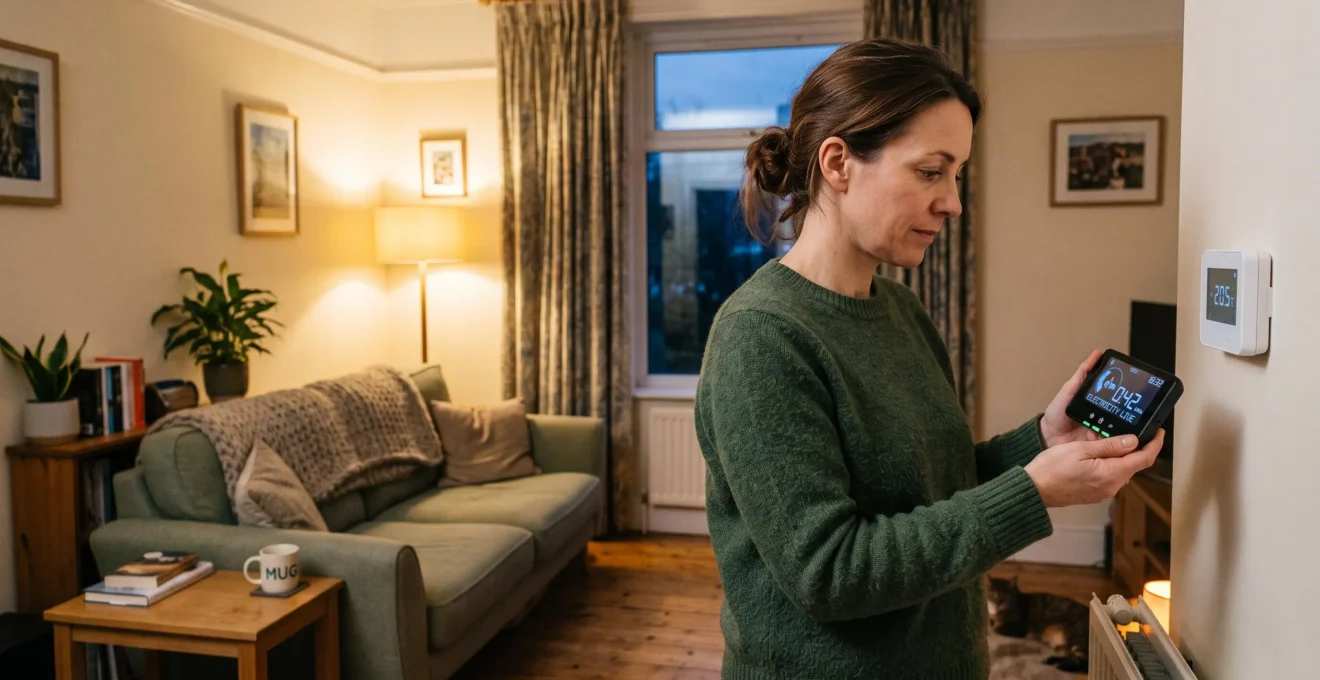
Managing home energy more efficiently does not require colder rooms, shorter evenings in front of the television or constant arguments about the thermostat. It requires separating the energy that supports your comfort from the energy consumed unnecessarily, at inconvenient times or at avoidably expensive electricity rates.
For UK households, smart meters, programmable heating controls and flexible electricity tariffs provide opportunities to make that distinction. The challenge is turning these tools into a manageable system rather than another collection of daily responsibilities.
Start by understanding when your home consumes energy, then establish heating schedules that protect comfortable indoor temperatures. Move flexible electrical loads into cheaper periods where practical and use automation to maintain those decisions. Measure the results before investing in additional equipment.
Effective home energy management should reduce unnecessary consumption and avoidable costs while demanding less attention from the people living in the house. Comfort is a requirement of the system, not something to negotiate away.
How to reduce energy waste without sacrificing home comfort
- Replace repetitive energy-saving habits with reliable schedules, appropriate thermostat settings and simple automation.
- Use a short weekly smart meter review to identify unusual consumption and assess whether changes are working.
- Choose electricity tariffs around your actual consumption patterns, shifting flexible appliances rather than compromising essential heating.
- Add solar integration, advanced energy management or demand flexibility services only when they offer a measurable benefit.
- Why Do “Energy-Saving Habits” Stop Working After the First 2 Weeks?
- How to Build a 10-Minute Weekly Energy Check Using Smart Meter Data?
- Time-of-Use Tariff or Fixed Rate: Which Works Better if You’re Home After 6pm?
- The Smart-Home Automation Mistake That Increases Heating Use by 10%
- When Should You Run Washing and Dishwashers to Cut Costs Without Noise Complaints?
- How to Shift 3 Key Loads Into Solar Hours Without Changing Your Routine?
- Smart Tariff or Home Energy Management System: Which Gives More Control?
- Will Smart Grids Lower Your Bills or Just Add Complexity?
Why Do “Energy-Saving Habits” Stop Working After the First 2 Weeks?
Energy-saving habits can stop working when they depend on daily motivation, memory and cooperation between household members. Once the initial enthusiasm fades, established routines can take over again. The more sustainable approach is to turn recurring energy-saving decisions into automatic settings and convenient defaults. Two weeks is an illustrative timeframe, not an established behavioural threshold.
Remembering to adjust the heating every morning or checking electricity prices before each wash creates additional work. Each decision may be straightforward, but maintaining an entire collection of manual routines can become burdensome.
Before abandoning an energy-saving measure, use three questions to identify why it stopped working:
- Was it visible? Could household members easily recognise when an action was necessary, or did it depend entirely on remembering?
- Was it measurable? Could you establish whether the behaviour reduced energy consumption or simply made the household less comfortable?
- Did it require someone to be present? Would the measure still work during a busy morning, an unexpected outing or a change in working hours?
A heating adjustment that repeatedly gets forgotten is a candidate for a programmable schedule. An appliance that regularly runs during an expensive tariff period may benefit from a suitable delay-start setting, provided it operates while someone is awake and at home.
Beware of all-or-nothing thinking. Abandoning an ambitious energy-saving routine could leave your household consuming even more than before if useful settings are also removed. Keeping one reliable improvement is preferable to repeatedly introducing and abandoning several demanding changes.
Once those settings are established, the remaining task is checking whether they work. A brief, consistent review of your household’s energy consumption is enough to begin identifying useful adjustments.
How to Build a 10-Minute Weekly Energy Check Using Smart Meter Data?
A ten-minute weekly energy check involves comparing electricity consumption across equivalent days, reviewing overnight demand and recording one unexpected change. Use kilowatt-hours rather than spending alone, because electricity prices can change independently of consumption. The objective is to identify a specific adjustment worth making, not to investigate every fluctuation in your household’s energy use.
Before establishing the routine, confirm that your smart meter communicates with your supplier and that historical consumption data is accessible. Whether you have a first-generation SMETS1 or second-generation SMETS2 meter, check the actual functionality available through your supplier’s app, online account or compatible monitoring service.
Your in-home display can help you observe current demand, but detailed half-hourly historical data may require a different interface. Contact your supplier if readings are missing or communication problems prevent a reliable review.
Divide your weekly review into three short tasks:
- Four minutes: compare consumption. Compare selected weekdays with the corresponding days from the previous week. Note differences in occupancy, outdoor temperatures and unusual activities. Matching weekdays helps control for routine differences but does not eliminate weather effects.
- Three minutes: inspect overnight demand. Review electricity consumption between midnight and 6am, excluding intentional loads such as scheduled EV charging.
- Three minutes: record one anomaly. Identify an unexplained change and write down one possible cause to investigate.
There is no universal overnight electricity baseload that every household should achieve. Refrigeration, networking equipment, essential medical devices and heating equipment can all contribute to legitimate demand. An unexplained increase may warrant checking an ageing fridge freezer, unexpected electric heating operation or electronics that remain active unnecessarily.
Use the following decision grid to prevent your weekly review from turning into constant troubleshooting.
| Status | What the readings show | Recommended response |
|---|---|---|
| Green | Stable baseload and expected consumption patterns | Keep existing settings and review next week. |
| Amber | Unexplained baseload increase over two consecutive weeks | Investigate one suspected appliance or scheduled load. |
| Red | Unexpected consumption spike following a settings change | Restore the previous safe setting and monitor the result. |
Once you understand when electricity is being consumed, you can assess whether your tariff rewards or penalises those established patterns.
Time-of-Use Tariff or Fixed Rate: Which Works Better if You’re Home After 6pm?
A time-of-use electricity tariff can work for households returning home after 6pm if enough electricity consumption can move outside expensive peak periods. A conventional fixed-rate tariff may be more suitable when cooking, electric heating and other essential evening activities dominate demand. The decision depends on your actual consumption profile, tariff charges and ability to shift electricity use without losing comfort.
Being at home during the evening does not automatically make a flexible tariff unsuitable. EV charging, electrically heated hot water and suitable appliance cycles may be scheduled separately from the activities that make your evenings comfortable.
According to Energy Saving Trust’s advice on time-of-use tariffs, households with substantial electricity consumption between 4pm and 7pm may find smart tariffs less beneficial unless some demand can be moved.
Different tariff structures create different opportunities and risks.
| Tariff structure | When it may work well | Main limitation |
|---|---|---|
| Conventional single-rate fixed tariff | Electricity consumption is difficult to reschedule. | No additional unit-rate benefit from moving demand into cheaper hours. |
| Economy 7 | Compatible equipment can use the designated cheaper period. | Electricity consumed outside that period may be more expensive. |
| Scheduled time-of-use tariff | Flexible loads can follow predictable off-peak windows. | Peak-period consumption may offset savings elsewhere. |
| Agile-style dynamic tariff | Substantial flexible demand can respond to changing prices. | Exposure to expensive periods and greater price uncertainty. |
Compare tariffs using your own half-hourly electricity consumption rather than advertised off-peak prices. Download available meter data, multiply consumption in each interval by the corresponding tariff rate, add standing charges and account for applicable switching or exit fees. Repeat the calculation using a realistic, safely rescheduled consumption profile.
Historical calculations are estimates, particularly when future unit rates can change.
For electrically heated homes, suitable pre-heating strategies or coordinated heating zones may allow some demand to move into cheaper periods. However, additional heat loss and equipment efficiency must be considered. Maintain comfortable temperatures and verify the total cost rather than assuming earlier heating always saves money. Changing your electricity tariff does not directly make gas cheaper.
A suitable tariff creates a financial incentive to manage demand, but the settings controlling your heating and appliances determine whether that opportunity becomes a genuine saving.
The Smart-Home Automation Mistake That Increases Heating Use by 10%
The central heating automation mistake is allowing smart routines to override an efficient heating schedule without clear limits. Unnecessary occupancy triggers, conflicting applications and poorly coordinated heating zones can increase demand even when the thermostat appears to be working correctly. A 10% increase is an illustrative possibility, not an established typical result or a universally applicable figure.
Consider a hypothetical household where a location-based automation activates heating whenever a resident enters a geofencing area. Passing near the property without returning home could trigger an unnecessary heating period. Another application might simultaneously apply a different temperature or occupancy rule.
The problem is not necessarily defective equipment. It is the absence of one coordinated heating strategy that determines which instructions take priority.
Energy Saving Trust’s smart meter guidance distinguishes smart meters from smart heating controls and warns that activating heating more frequently through smart controls can increase bills.
Smart radiator valves deserve particular attention. Where individual rooms can request heat independently, overlapping demands may create repeated boiler operation. The effect depends on the heating system, boiler modulation, control compatibility and installation. Frequent short cycles are a reason to investigate coordination, not proof of wasted energy by themselves.
Use the following audit to identify conflicting controls and test their effect.
Audit your smart heating automation in five steps
- List every thermostat, radiator valve, application and automation that can request heating. Produce a written inventory of active controls.
- Review occupancy triggers, geofencing rules and temperature overrides. Record any conflicting instructions or unexplained heating requests.
- Establish a coordinated baseline schedule that maintains suitable indoor temperatures. Save the schedule and record relevant energy consumption over one week with optional smart overrides disabled.
- Restore the automation being evaluated for the following week while maintaining comparable comfort settings. Record consumption, outdoor conditions, occupancy and heating activity.
- Compare the two periods and document which automation should be retained, adjusted or removed, noting any differences that prevent a reliable comparison.
Calculate the percentage change by subtracting baseline consumption from consumption with automation enabled, dividing by baseline consumption and multiplying by 100. Use consumption relevant to the heating system: gas readings for gas heating or appropriate electricity readings for electric heating.
Similar outdoor temperatures and household activities make the comparison more informative, although a short household trial cannot establish causation with certainty. Keep frost protection, essential heating functions and manufacturer-required settings active throughout.
Apply the same principle to domestic appliances: establish a safe, predictable operating window before introducing automation designed to reduce running costs.
When Should You Run Washing and Dishwashers to Cut Costs Without Noise Complaints?
Run washing machines and dishwashers during the cheapest suitable electricity periods when someone is awake and at home, and when appliance noise will not disturb neighbours. Check the full programme duration against your tariff window. A cycle that starts during a cheap period but finishes during an expensive one may deliver less financial benefit than expected.
Begin by recording the programme duration displayed by each appliance. Then identify the electricity tariff windows that overlap with acceptable household operating hours. The relevant question is whether the complete cycle fits, not simply whether the starting time qualifies for a cheaper rate.
Eco programmes require particular attention. Their longer running times can change the most suitable starting hour. Where a programme extends beyond the cheaper window, compare the expected consumption and cost rather than assuming that a shorter programme is necessarily more efficient.
Use this scheduling map to match appliance operation with the practical constraints of your home.
| Available period | Potential use | Condition |
|---|---|---|
| Morning after waking | Washing or dishwashing before rates increase | Someone remains at home and noise is acceptable. |
| Daytime off-peak or solar generation hours | Eco programmes and longer washing cycles | The household can supervise appliance operation. |
| Evening after peak pricing | Appliance cycles following dinner or other household activities | The programme finishes before bedtime and respects applicable noise restrictions. |
| Overnight while occupants sleep | Avoid scheduling washing and dishwashing. | Cheap electricity does not remove fire safety concerns. |
Fire safety takes precedence over tariff optimisation, especially when an appliance would otherwise run while occupants are asleep.
“Don’t leave the washing machine, tumble dryer or dishwasher on overnight and unattended.”
If you live in a flat, check any applicable lease conditions or building rules concerning appliance noise. Consult the manufacturer’s operating instructions and relevant insurance or warranty terms rather than assuming that unattended operation is acceptable. A delayed-start function is useful only when the resulting operating window remains safe and suitable.
Once suitable operating windows are established, households with solar panels can use the same scheduling approach to consume more of their own electricity generation.
How to Shift 3 Key Loads Into Solar Hours Without Changing Your Routine?
Shift electrically heated hot water, suitable washing and dishwashing cycles, and EV or home battery charging into periods of available solar generation. Configure compatible appliance timers, charging controls or solar-aware equipment to manage the timing automatically. The useful amount of shifted consumption depends on your solar output, existing electricity demand, equipment compatibility and household availability.
Prioritise equipment with meaningful electricity demand and flexible operating times. Moving the charging time of a small electronic device may offer less value than coordinating a larger electrical load that can operate without interrupting household activities.
- Electric water heating: use compatible cylinder controls or a professionally installed solar diverter to direct suitable surplus generation towards hot water while retaining required temperature and hygiene settings.
- Washing machines and dishwashers: select suitable daytime programmes using built-in scheduling functions when occupants can supervise their operation.
- EV or home battery charging: configure compatible charging equipment to respond to available solar generation while respecting charging requirements and equipment limits.
Start by reviewing your inverter’s generation records and available import or export data. Identify when solar production exceeds the electricity demand already present in your home. That surplus, rather than total daily solar generation, represents the immediate opportunity for additional self-consumption.
Where several devices respond to the same generation window, establish priorities. Starting every flexible load simultaneously could cause additional grid imports if their combined demand exceeds available solar output.
Hypothetical example: coordinating solar-powered household loads
Consider a household with solar panels, an electric hot water cylinder and an EV charger. Instead of manually checking generation throughout the day, compatible controls prioritise the cylinder’s required heating period and direct remaining available surplus towards vehicle charging.
Washing is scheduled separately for a suitable daytime window when someone is at home. The household continues using hot water, clean clothes and the vehicle as required. The change concerns electricity timing, not the services received, and any financial benefit must be assessed against import costs, export payments and equipment costs.
Use smart plugs only with equipment explicitly suitable for external switching and within the manufacturer’s electrical and operating requirements. Built-in appliance scheduling and dedicated charging controls are preferable where external power switching is unsuitable.
Households without solar panels can apply the same principle to predictable off-peak tariff periods. The source of cheaper electricity changes, but the method of coordinating flexible demand remains similar.
If several flexible loads, generation sources and tariff windows become difficult to coordinate independently, a dedicated home energy management system may offer additional control.
Smart Tariff or Home Energy Management System: Which Gives More Control?
A home energy management system (HEMS) provides more direct control over when compatible equipment consumes, stores or distributes electricity, while a smart tariff determines the price paid at different times. A tariff may be sufficient for a household with predictable flexible loads. A HEMS becomes more relevant when coordinating several devices manually is difficult or leaves measurable savings unrealised.
Distinguish between unnecessary consumption and unnecessarily expensive consumption. Heating an unoccupied room without a valid reason is a consumption problem. Charging an EV during an expensive period when a cheaper suitable window is available is primarily a timing and price problem.
A different tariff cannot eliminate unnecessary demand by itself. Similarly, a sophisticated management system cannot guarantee lower bills if there are few opportunities to improve existing settings.
| Decision criterion | Smart tariff | Home energy management system |
|---|---|---|
| Primary function | Changes electricity prices according to tariff rules. | Coordinates compatible equipment and electricity flows. |
| Implementation | Tariff selection, suitable metering and consumption scheduling. | Equipment integration, configuration and possible hardware installation. |
| Financial commitment | No dedicated HEMS purchase required; tariff terms and charges apply. | May involve hardware, installation or ongoing service costs. |
| Best conditions | Predictable flexible electricity consumption. | Multiple controllable loads, particularly alongside solar panels or battery storage. |
| Main risk | Higher costs during expensive tariff periods. | Unnecessary complexity, incompatible devices or insufficient financial benefit. |
Before investing in a HEMS, answer three eligibility questions:
- Does your household have substantial electrical demand that can safely move between different operating periods?
- Can the proposed system communicate reliably with your existing heating, charging, storage or generation equipment?
- Do your consumption records identify an opportunity large enough to justify installation and ongoing costs?
The two approaches can complement each other. A compatible HEMS can use tariff price signals alongside solar generation and household requirements to determine suitable equipment operating periods.
However, a minimal setup may be sufficient: a suitable time-of-use tariff, a programmable EV charger and compatible scheduling controls for electric water heating, for example. Such a configuration does not necessarily require a home battery or a comprehensive automation platform.
Keep the simplest configuration that delivers measurable results. More equipment is justified when it resolves an identifiable coordination problem, not merely because it provides more settings to adjust.
Key takeaways before connecting your home to wider energy flexibility services
- Distinguish reductions in electricity consumption from savings achieved by purchasing electricity at cheaper times.
- Retain control over essential comfort, hot water availability and safe appliance operation when introducing automated responses to external signals.
- Assess additional energy management technology against measured opportunities and its total cost, rather than the number of features available.
Will Smart Grids Lower Your Bills or Just Add Complexity?
Smart grids can help participating households reduce electricity costs or receive flexibility rewards, but lower bills are not automatic. The most practical opportunities involve shifting suitable demand in response to electricity prices or grid requirements. Households with reliable, compatible scheduling systems may find participation easier, while those with inflexible consumption can reasonably choose not to engage.
A smart grid uses digital information and coordinated controls to manage electricity demand and supply more effectively. For households, relevant applications include communicating smart meters, time-dependent tariffs and services that encourage electricity consumption to move between different periods. More extensive automated coordination is an evolving capability rather than something every home already experiences.
27 November 2024
The Demand Flexibility Service in Great Britain moved from winter-only operation to a year-round service. This established a framework for rewarding eligible changes in electricity consumption beyond the winter period, without guaranteeing regular events or individual earnings.
The National Energy System Operator‘s Demand Flexibility Service allows eligible households in England, Scotland and Wales to participate through a registered electricity supplier or aggregator. A working smart meter is required. Providers communicate relevant event times, participation arrangements and available rewards.
Participation in individual events is optional, and rewards vary according to provider terms and the consumption changes achieved. This makes flexibility payments a potential additional benefit rather than dependable household income. Northern Ireland has separate electricity market arrangements and should not be assumed to share the same eligibility rules.
Automation may reduce the effort involved in responding to price signals or flexibility events. However, manually participating households can also benefit when a requested change fits their existing routine. Neither approach guarantees rewards, and the programme’s historical development should not be taken as confirmation of every subsequently proposed change to its operating rules.
Prioritise your household’s energy management systems in this order:
- Establish comfortable, reliable heating schedules and remove conflicting smart controls.
- Measure electricity consumption and investigate unexplained changes.
- Align suitable flexible loads with your tariff or available solar generation.
- Evaluate optional flexibility schemes and advanced automation against their actual benefits and participation requirements.
Start this week by saving your electricity consumption records, reviewing your heating schedule and identifying one substantial electrical load that can safely operate at a more suitable time. Measure the result before adding another change. The objective is a home that manages energy efficiently in the background while remaining warm, comfortable and easy to live in.
Can I manage my home energy efficiently without replacing my existing thermostat?
Yes. If your existing thermostat and heating programmer provide reliable temperature control and suitable operating schedules, start by improving their settings. Additional smart heating equipment is worth considering when existing controls cannot meet a specific requirement, such as accommodating changing occupancy patterns or coordinating compatible heating zones.
Can a smart meter reduce my electricity bills automatically?
A smart meter measures energy consumption and can communicate readings to your supplier, but it does not independently eliminate unnecessary consumption or optimise heating equipment. Financial savings depend on how you use the information, the tariff you select and the changes made to your household’s energy management settings.
Can renters improve home energy management without permanent installations?
Renters can begin with existing heating controls, accessible smart meter data and built-in appliance scheduling functions. Where tariff selection is available to them, comparing electricity prices against their actual consumption may also be worthwhile. Check tenancy arrangements before modifying fixed heating equipment or installing dedicated energy management hardware.
Why has my energy bill increased even though my household uses less electricity?
Electricity consumption and electricity costs are different measurements. Higher unit rates, changes in standing charges, greater consumption during expensive tariff periods or adjustments to billing arrangements may explain the difference. Compare equivalent billing periods, actual kilowatt-hour consumption and applicable tariff charges before concluding that an energy-saving measure has failed.
Can increasing solar self-consumption ever be less profitable than exporting electricity?
Yes. If exported solar electricity earns more than the cost of purchasing equivalent electricity during another suitable period, shifting that consumption into solar hours may offer less financial benefit. Compare your actual import and export rates, equipment efficiency and any storage-related costs before deciding how to use surplus generation.