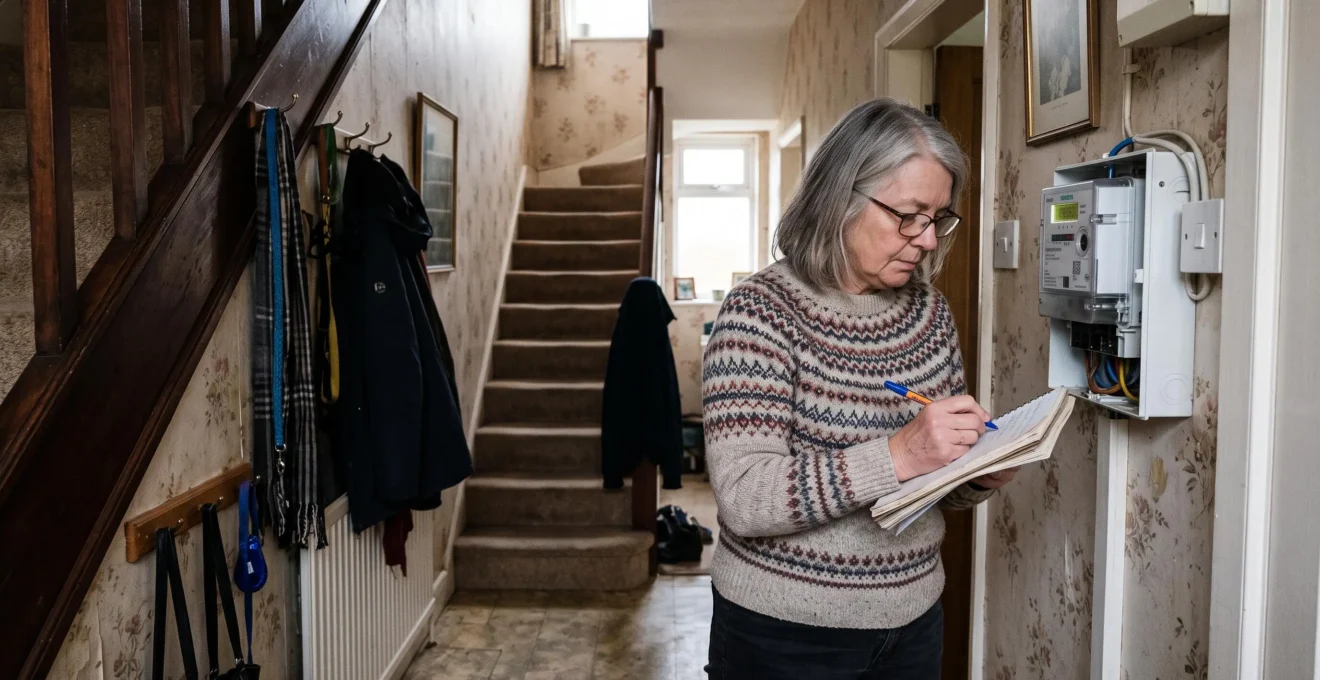
Protecting your household from UK energy price swings does not require predicting gas markets, monitoring headlines every morning or repeatedly switching suppliers. A more dependable approach is to understand your actual energy costs, establish clear conditions for taking action and review your options at planned intervals.
Britain’s energy market has changed substantially since the 2021–2022 crisis. Wholesale gas prices can still influence electricity bills, the Ofgem price cap changes quarterly, and fixed deals offer different combinations of certainty, flexibility and potential cost. Even a household that uses electricity rather than gas can remain exposed to wider market movements.
The practical goal is not to eliminate every price increase. It is to make your energy spending more predictable without paying unnecessarily for protection. That means knowing your annual consumption, comparing the full costs of tariffs and recognising when a change in circumstances genuinely justifies another decision.
Protecting your household energy budget: the essentials
- Use three triggers for action: a meaningful price difference, a scheduled review date and a change in household energy needs.
- Compare unit rates, standing charges and exit fees against your own consumption rather than headline annual bill figures.
- Review your tariff approximately every 90 days, with additional checks when a fixed contract approaches expiry or your circumstances change.
- Why Does the UK Energy Market Change So Fast Compared With 10 Years Ago?
- How to Set a Simple Energy Risk Plan With 3 Triggers for Action?
- Fixed, Variable, or Tracker Tariff: Which Is Safest if You Work From Home?
- The Switching Mistake That Cancels Savings With Exit Fees and Bad Timing
- When Should You Review Your Tariff: Monthly Checks or a 90-Day Routine?
- Why Do Gas Price Shocks Show Up in Electricity Bills Even if You Don’t Use Much Gas?
- How to Decode Your Energy Bill in 10 Minutes and Spot What You Can Control?
- Who Actually Controls Your Energy Bill in the UK Energy Sector?
Why Does the UK Energy Market Change So Fast Compared With 10 Years Ago?
The UK energy market changes quickly because British electricity prices remain sensitive to wholesale gas costs, while domestic tariff rules respond to changing supplier expenses. The energy crisis also reshaped consumer protections. Today, households must distinguish between movements in wholesale markets, quarterly regulated price changes and the separate terms of their own energy contracts.
One important reason is how electricity is traded. In wholesale electricity auctions using marginal pricing, the most expensive generation required to meet demand helps determine the market-clearing price. Gas-fired power stations frequently occupy that position, meaning a rise in natural gas costs can affect electricity prices even when wind farms and solar installations are producing substantial amounts of power.
The House of Commons Library briefing on electricity bill costs explains this relationship alongside the network, policy and supplier costs included in electricity bills. Its May 2026 analysis also documents how electricity prices remained above pre-crisis levels following the exceptional increases of 2022.
The 2021–2022 crisis exposed weaknesses in energy retailing. Ofgem recorded 28 supplier exits beginning in August 2021 during its reporting period, affecting approximately 2.4 million customers. Bulb’s failure was handled separately through special administration. These events demonstrated why a cheap offer is not the only consideration when assessing an energy supplier.
Government intervention through the Energy Price Guarantee subsequently provided temporary support during the crisis. That scheme was distinct from Ofgem’s energy price cap, which regulates eligible default tariffs rather than providing an unconditional limit on household bills.
Today, the quarterly price cap creates a regular cycle of announcements. Standing charges, network costs, wholesale costs and government policy can change independently, so an apparently stable household consumption pattern may still produce a different bill.
The key distinction is between market volatility and personal exposure. A wholesale price movement does not necessarily appear immediately on a fixed tariff, while a standard variable tariff can change when the applicable regulated rates are updated.
Rather than trying to predict the next market movement, households can establish specific thresholds that determine whether a change deserves attention.
How to Set a Simple Energy Risk Plan With 3 Triggers for Action?
A practical household energy risk plan needs only three triggers: a price difference large enough to matter, a fixed date for reviewing tariffs, and a meaningful change in personal circumstances. Each trigger prompts an assessment rather than an automatic switch. This creates a repeatable decision process without requiring daily attention to energy news.
The first trigger is financial. Decide how much potential annual saving would justify the effort and uncertainty of changing tariffs. Then compare your existing deal with available alternatives using actual consumption.
For electricity, a useful starting calculation is:
Annual price difference = annual kWh consumption × difference in unit rate.
Adjust that figure for standing charge differences and any relevant switching fees. If the offer covers both gas and electricity, calculate the two fuels separately before combining the results.
Hypothetical example: setting a meaningful price trigger
Suppose a household uses 3,000 kWh of electricity annually and sees an alternative unit rate that is 2p per kWh cheaper. With identical standing charges, the estimated saving would be £60 over a full year at that usage level.
If the new tariff also has a standing charge 5p per day higher, that adds £18.25 annually, reducing the illustrative saving to £41.75 before any exit fees. A household that requires at least £50 of net annual savings would not act on that offer.
The second trigger is calendar-based. Schedule a review approximately every 90 days, ideally near the announcement of the next Ofgem price cap. An additional reminder should flag when your fixed contract approaches its final 49 days.
The third trigger concerns your household. Moving home, starting full-time home working, purchasing an electric vehicle, installing a heat pump or changing your heating arrangements may alter your consumption enough to justify an earlier review.
When a trigger occurs, consider three responses. Switch if a genuinely better tariff produces sufficient net benefit. Adjust consumption if efficiency improvements offer a more dependable saving. Or consciously keep your current arrangement when alternatives provide too little benefit or introduce unwanted risk.
Recording a short reason for each decision prevents repeated reconsideration of offers that have already been assessed.
Once those triggers are established, the next challenge is deciding which type of tariff matches your household’s actual pattern of use.
Fixed, Variable, or Tracker Tariff: Which Is Safest if You Work From Home?
For someone working from home, the safest energy tariff depends on daytime consumption, tolerance for unpredictable costs and the starting price of each offer. A fixed tariff generally improves unit-price predictability, a standard variable tariff offers flexibility within Ofgem’s applicable cap, and a tracker follows a specified pricing mechanism. None is automatically cheapest or safest.
Home working can change when electricity is consumed. Computers, lighting, cooking, heating and additional hot water use may increase daytime demand. This matters particularly when comparing standard single-rate tariffs with time-of-use plans that offer cheaper electricity during selected hours.
A household using most electricity during the day might find a single-rate tariff more suitable than one designed around substantial overnight consumption. However, someone with an electric vehicle charging overnight may reach a different conclusion.
The comparison below focuses on the risks relevant to households spending substantial time at home.
| Decision factor | Fixed tariff | Standard variable tariff | Tracker tariff |
|---|---|---|---|
| Price predictability | Agreed rates normally remain fixed for the stated term | Rates may change, subject to the applicable Ofgem cap | Rates move according to the contract’s tracking formula |
| Exposure to rising prices | Reduced during the fixed period | Exposed to permitted tariff changes | Depends on tracking mechanism and any contractual limits |
| Benefit from falling prices | Usually limited until switching or expiry | Possible when regulated rates or supplier prices fall | Possible when the tracked benchmark falls |
| Switching flexibility | Exit fees may apply | Generally possible without exit fees | Depends on contract terms |
| Best suited to | Households prioritising predictable rates | Households valuing flexibility | Households comfortable with contract-specific variability |
The Ofgem price cap is not a minimum price or a guarantee that bills cannot rise. It limits relevant unit rates and standing charges on covered tariffs, not the amount a household can consume. Fixed deals are generally outside that default tariff cap.
Before selecting a fixed tariff, assess its duration and exit fees. A seemingly inexpensive fixed deal could prove restrictive if you expect to move, change heating systems or benefit from future market declines.
Equally, an initially more expensive fixed option could be worthwhile for someone who places considerable value on rate certainty and expects stable consumption throughout the contract. That is a risk preference, not evidence that paying more always produces financial savings.
For tracker tariffs, examine exactly what is tracked, how often the rate changes, whether a maximum rate applies and how the supplier can amend the arrangement. The name alone does not establish the level of protection.
Whichever structure you prefer, the financial advantage can disappear if you switch without checking termination charges and the timing of your move.
The Switching Mistake That Cancels Savings With Exit Fees and Bad Timing
The switching mistake that most directly undermines energy savings is comparing advertised prices while overlooking exit fees and the period over which savings can actually accumulate. A cheaper tariff is not necessarily a better deal if leaving your current contract costs more than you expect to save. Timing therefore matters as much as headline rates.
For households on fixed energy contracts, the final 49 days are particularly important. According to Citizens Advice guidance on switching energy supplier or tariff, customers with 49 days or fewer remaining can generally switch without the usual early termination fee. With 50 days or more remaining, an exit fee may apply.
Contractual circumstances still matter, so confirm the exact charges and expiry date with your supplier before arranging a switch.
Use a consistent calculation to compare offers:
Projected annual electricity cost = (unit rate × estimated annual kWh) + (daily standing charge × 365).
Convert rates into pounds before calculating. Repeat for gas where applicable, include relevant taxes consistently and compare the same projected consumption for both offers.
If your current contract has only a few months remaining, a full-year comparison is not enough. Estimate the savings available over the remaining contract period and consider what happens after expiry. Otherwise, you risk comparing costs across unequal periods.
Hypothetical example: when switching loses money
Imagine a household expects to save £8 per month by moving to a cheaper tariff. If only four months remain before the existing fixed deal ends, the potential saving over that period is £32.
If leaving immediately triggers a £50 exit fee, switching would produce a net loss of £18 across those four months, assuming all other charges remain equal. Waiting until the penalty-free period could make more sense, although available offers may change.
Another risk is reacting to alarming headlines after prices have already moved. Fixed offers can change or disappear as suppliers reassess their costs, but no household can reliably determine the best time to fix from news coverage alone.
Instead of trying to identify a perfect market entry point, obtain current quotations and test whether the available savings justify the commitment.
Once the switching decision has been made, a regular review schedule can help prevent unnecessary second-guessing.
When Should You Review Your Tariff: Monthly Checks or a 90-Day Routine?
For many UK households, reviewing energy tariffs approximately every 90 days is a practical starting point because Ofgem updates its price cap quarterly. Monthly checks may be useful when a contract is close to expiry or circumstances are changing, but they are not inherently necessary for everyone. A scheduled review reduces the number of decisions without ignoring important tariff developments.
Ofgem’s quarterly timetable provides a useful external reference. The regulator sets the maximum unit rates and standing charges for eligible standard variable tariffs, while actual charges depend on factors including region, payment method and meter configuration.
The Ofgem explanation of the energy price cap and standing charges clarifies that the cap does not limit a household’s total bill. Higher consumption still increases the amount payable.
A quarterly review is therefore a sensible editorial planning method, not an official Ofgem instruction or a proven guarantee of better financial outcomes.
Keep each review focused. First, confirm that your meter readings are accurate. Second, compare your actual tariff rates with the applicable or forthcoming regulated rates and available offers. Third, check whether your fixed contract is approaching its end date.
Comparison websites can help identify alternatives, but different services may display different tariffs. Checking more than one comparison service and looking directly at suppliers’ offers can produce a more complete picture. Do not assume any one ranking covers the entire market.
Your five-step household energy review checklist
- Record your latest meter reading or verified smart-meter reading. Deliverable: a dated consumption record.
- Copy your current electricity and gas unit rates and standing charges. Deliverable: a two-fuel tariff summary.
- Note your next review date and fixed-contract expiry, where relevant. Deliverable: two calendar reminders.
- Compare your current deal with suitable alternatives using your annual kWh figures. Deliverable: a simple cost comparison.
- Write down whether you will switch, reduce consumption or keep your existing tariff. Deliverable: a one-sentence decision with its financial reason.
It is also reasonable to make an exception to the timetable if a tariff is approaching expiry, your supplier announces a relevant contract change or household energy needs shift substantially.
Understanding why gas markets influence electricity prices makes those periodic price checks easier to interpret.
Why Do Gas Price Shocks Show Up in Electricity Bills Even if You Don’t Use Much Gas?
Gas price shocks can affect electricity bills because gas-fired power stations frequently determine the wholesale electricity market-clearing price in Great Britain. As a result, households that use very little gas—or no gas at all—can still face higher electricity costs when natural gas becomes more expensive. The effect depends on their tariff and when supplier costs are passed through.
The mechanism is known as marginal pricing. In relevant wholesale auctions, electricity generators submit offers to supply power. The market needs enough generation to meet demand, and the marginal accepted offer helps establish the clearing price.
Because gas-fired generation often supplies the additional electricity required, fluctuations in gas prices can influence the wider wholesale electricity market. This relationship does not mean every unit of electricity is bought under identical auction conditions or that every renewable generator receives the same revenue under every contract.
Consider an all-electric household with a heat pump. It buys no gas directly, yet the electricity supplier may face wholesale costs influenced by gas-fired generation. Those costs can eventually affect consumer tariffs.
There is an important distinction between paying for gas directly and being exposed to gas prices indirectly.
Increasing renewable generation can reduce the amount of fossil fuel burned across the electricity system, but that does not automatically remove gas’s influence on the marginal wholesale price. The timing of electricity generation and demand remains important.
During periods of low wind output and limited solar generation, especially alongside high winter demand, the electricity system may rely more heavily on dispatchable generation. Such conditions can increase sensitivity to gas-market costs, although actual prices also depend on demand, interconnections, storage and other supply conditions.
For households, this explains why electrification and tariff risk management should be considered separately. Electric heating can offer efficiency advantages without necessarily making the household immune to wholesale energy price volatility.
A fixed electricity tariff may reduce exposure to retail price changes over its agreed duration. A standard variable tariff reflects changes more gradually through the applicable regulated pricing cycle, while tracker arrangements follow their particular contractual rules.
The next useful step is to identify exactly where those movements appear on your own bill and which charges you can influence.
How to Decode Your Energy Bill in 10 Minutes and Spot What You Can Control?
To understand your UK energy bill quickly, find two figures for each fuel: the unit rate charged per kilowatt hour and the daily standing charge. Then check your consumption, billing dates and whether the readings are actual or estimated. These details explain most differences between tariff offers and help separate controllable household costs from market-driven charges.
The unit rate is the price paid for each kWh consumed. The standing charge is a daily amount payable even when no electricity or gas is used.
For a simple annual estimate, multiply your projected kWh consumption by the unit rate, then add the standing charge multiplied by 365 days. If your rates are displayed in pence, divide the resulting amounts by 100 to obtain pounds.
For a dual-fuel household, calculate electricity and gas separately. Make sure the figures include taxes on a consistent basis and recognise that any unusual tariff discounts, separate charges or time-of-use arrangements may require further calculation.
Standing charges matter particularly for households with low consumption. A second home or a property occupied only occasionally still incurs daily standing charges while the supply remains active under a tariff that includes them.
To decide where your efforts are worthwhile, divide the main influences on your bill into three groups.
| What you control | What the market influences | What regulation and policy influence |
|---|---|---|
| Consumption habits and appliance efficiency | Wholesale gas and electricity prices | Default tariff price cap methodology |
| Tariff and supplier selection | Supplier purchasing costs | Network cost allowances and policy obligations |
| When you use electricity, where tariff structure rewards timing | Market demand and supply conditions | Taxes and government support arrangements |
These categories are connected rather than completely independent. For example, Ofgem’s regulated price calculations incorporate some underlying market and network costs. However, the table makes clear where household decisions can have a direct effect.
Check whether your bill is based on actual meter readings or estimated consumption. Estimated readings can produce an apparent increase unrelated to your current usage, while later corrections can cause unexpectedly large bills.
Also distinguish your tariff’s calculated energy charges from your Direct Debit amount. Monthly payments may spread projected annual costs across the year and can differ from the energy actually used during one billing period.
Finally, use your estimated annual consumption in kWh when comparing offers. An advertised annual price based on typical usage may misrepresent costs for a household with electric heating, substantial daytime occupancy or unusually low demand.
Your bill is therefore more useful as a measurement tool than as a signal to react whenever the amount changes.
Key takeaways before your next energy decision
- No single organisation controls all household energy costs: prices emerge from wholesale markets, supplier decisions, network charges and regulation.
- Your most useful financial decisions concern the tariff you choose, the energy you consume and the contractual commitments you accept.
- Supplier reliability and continuity-of-supply protections matter alongside the advertised price of an energy deal.
Who Actually Controls Your Energy Bill in the UK Energy Sector?
No single organisation controls your entire UK household energy bill. Ofgem regulates eligible default tariff charges, suppliers set commercial offers, wholesale markets influence energy purchasing costs, and network operators contribute to the costs of delivering electricity and gas. Government decisions also affect taxes, policy obligations and support schemes. Households retain meaningful control over tariff choice and consumption.
Understanding these separate responsibilities helps prevent frustration about costs that cannot be negotiated directly.
Ofgem regulates the energy sector in Great Britain and sets the domestic energy price cap for eligible standard variable tariffs. Its calculation considers several components, including wholesale energy, networks, supplier operating expenses, policy costs and permitted supplier earnings.
Energy suppliers purchase energy and sell it to households through their tariffs. Most domestic suppliers are primarily retail intermediaries rather than the operators of all the power stations generating the electricity they sell.
They can compete on pricing, contract terms, customer service and other features, subject to relevant regulatory rules. Their costs and commercial decisions influence which fixed and variable offers reach the market.
Electricity and gas network operators maintain the infrastructure used to transport energy. Their costs form part of the broader charging system rather than being individually negotiable by ordinary domestic consumers.
Government decisions can influence bills through taxation, social or environmental policy costs and temporary support mechanisms. The historical Energy Price Guarantee demonstrated how government intervention can change what households pay without fundamentally removing the underlying wholesale market risk.
There is also a supplier resilience dimension. In its 2021–2022 annual report, Ofgem documented the widespread supplier exits that followed major increases in wholesale prices. The scale of those failures showed why financial resilience matters even when households are mainly comparing tariff prices.
28 supplier exits
Ofgem recorded 28 suppliers exiting the market from August 2021 within its 2021–2022 reporting period, affecting approximately 2.4 million customers. Bulb’s separate failure was handled through special administration. These are historical crisis figures, not a current measure of supplier failure risk.
Ofgem Annual Report and Accounts 2021-22.
When a domestic supplier fails, Ofgem has arrangements for appointing another supplier to maintain continuity of energy supply. This protection does not mean customers are guaranteed to retain their former tariff price.
For households, the most realistic strategy is to control the decisions that remain available: selecting a suitable tariff, tracking accurate consumption, improving efficiency and checking contractual conditions before switching.
Trying to predict the behaviour of every market participant adds complexity without guaranteeing a better outcome.
For your next practical step, take one recent energy bill, record your annual kWh consumption and current tariff rates, then schedule a short review around the next relevant price cap announcement or contract milestone. A simple, repeatable process is more sustainable than constant market watching.
Does the Ofgem price cap guarantee that my annual energy bill cannot exceed a certain amount?
No. The Ofgem price cap limits the relevant unit rates and standing charges on covered default tariffs. It does not impose a fixed ceiling on your total energy spending. Your final bill depends on consumption, the rates applicable to your circumstances and the relevant billing period.
Can I switch energy suppliers if I am already paying by Direct Debit?
Yes. Paying by Direct Debit does not normally prevent switching. Your ability to leave without charges depends primarily on the tariff and contract conditions. Check the remaining contract term, possible exit fees and any outstanding account balance, and provide an accurate meter reading when switching.
Should I increase my monthly Direct Debit whenever the energy price cap rises?
Not automatically. First check whether your tariff is affected, your actual or projected consumption, your account balance and the supplier’s revised forecast. Direct Debit payments are often designed to spread expected costs across the year rather than match each month’s exact consumption. Ask your supplier to explain a proposed adjustment if its calculations appear inaccurate.
Can a smart meter protect me from rising energy prices?
A smart meter cannot prevent tariff increases, but it can help you understand consumption and reduce reliance on estimated readings when it is communicating correctly. Its information may also help identify usage patterns. Savings depend on whether you subsequently change consumption habits or choose a suitable tariff, rather than on the meter installation alone.
What should I do if my energy bill suddenly becomes unaffordable?
Contact your supplier promptly to discuss the bill, verify meter readings and ask about suitable payment arrangements or available support. You can also seek independent advice from Citizens Advice or relevant local consumer support services. Do not wait for your next quarterly tariff review when there is an immediate risk of falling behind on payments.